Microneedling is one of the most consistently requested treatments in the A Moment’s Peace medical spa. The reason is simple: it produces real, measurable improvements in skin texture, tone, and structure without the downtime or risk profile of more invasive procedures.
Here is a complete, honest guide to what microneedling actually does, who it is most suited for, and what a realistic outcome looks like after a series of sessions.
What Microneedling Is
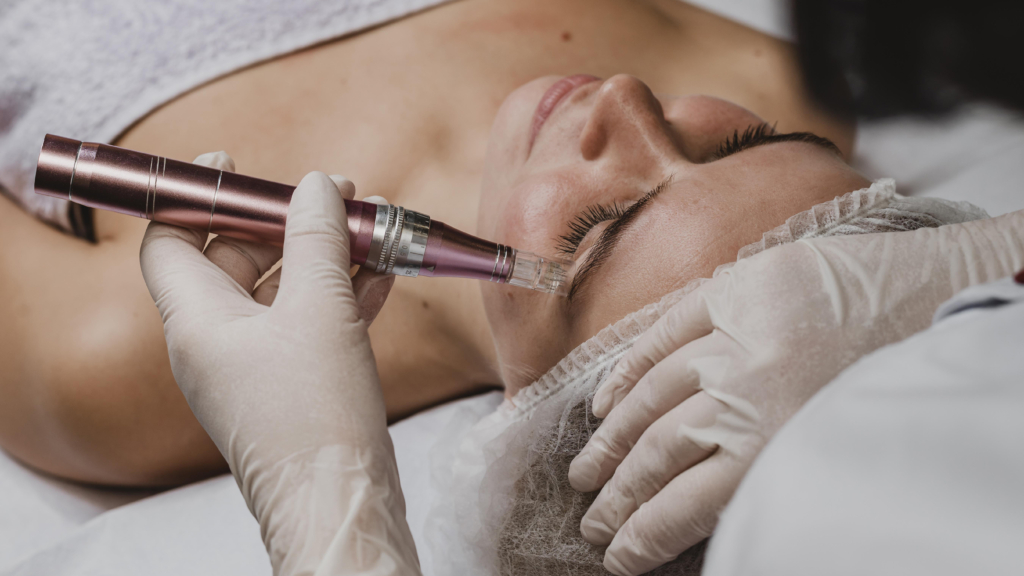
Microneedling, also called collagen induction therapy, is a minimally invasive procedure that uses a device covered in sterile, fine-gauge needles to create controlled micro-channels in the skin’s surface. The device is passed across the treatment area in a stamping motion, penetrating the skin to a precisely calibrated depth between 0.5 and 2.5 millimeters depending on the area being treated.
A Moment’s Peace uses SkinPen by Bellus Medical, the only FDA-cleared microneedling device on the market. SkinPen is unique in offering software-controlled depth adjustment for each area of the face, which allows the esthetician to calibrate penetration depth based on skin thickness and the specific concerns being addressed in each zone.
How Microneedling Works: The Collagen Cascade
The mechanism behind microneedling is the body’s wound-healing response. When the micro-channels are created, the skin registers them as micro-injuries and initiates a repair cascade: blood flow increases, growth factors are released, and fibroblast cells mobilize to produce new collagen and elastin.
Collagen is the structural protein that keeps skin firm, smooth, and youthful. Research confirms that collagen production declines measurably from the mid-20s onward. A 2016 peer-reviewed study in the Journal of Cutaneous and Aesthetic Surgery confirmed that microneedling produces a significant, clinically measurable increase in collagen and elastin synthesis after a course of treatments.
The result is not a surface-level change. Microneedling improves the structural quality of the skin from within, producing changes that are more durable than topical treatments can achieve.
What Microneedling Treats
Acne Scars and Post-Inflammatory Marks
Microneedling is one of the most effective non-surgical treatments for acne scarring, particularly atrophic scars that create depressions in the skin surface. The collagen remodeling process fills in these depressions from below, gradually reducing their depth and visibility. Multiple PubMed-indexed clinical studies confirm statistically significant improvement in atrophic acne scarring after a series of microneedling sessions.
It is also effective for post-inflammatory hyperpigmentation because it promotes faster cell turnover and disperses accumulated melanin without the risk of creating additional pigmentation that chemical or heat-based treatments carry on darker skin tones.
Fine Lines and Early Wrinkles
The collagen and elastin production stimulated by microneedling improves skin elasticity and firmness. Fine lines around the eyes, mouth, and forehead respond well to microneedling because the new collagen essentially plumps the skin from below, reducing the depth of the lines. Results develop gradually over four to six weeks as collagen production progresses.
Uneven Texture and Enlarged Pores
Microneedling tightens the skin around individual pores by stimulating the surrounding collagen matrix. As the skin becomes firmer, pores appear smaller and the overall surface texture becomes more refined. This is a structural change, not a temporary one, and it persists between sessions.
Sun Damage and Hyperpigmentation
Accelerated cell turnover from microneedling helps the skin shed the pigmented surface cells that accumulate from UV damage. Combined with the collagen remodeling that improves overall tone, microneedling is effective for addressing uneven skin tone and early sun damage.
Skin Laxity and Loss of Firmness
As a collagen-stimulating treatment, microneedling addresses the underlying structural cause of skin laxity. It is not a replacement for surgical lifting procedures, but for mild to moderate laxity, particularly in the cheeks, jawline, and neck, a series of treatments produces meaningful tightening.
Who Microneedling Is Best Suited For
Microneedling is appropriate for most skin types and tones. It is one of the few skin rejuvenation treatments that carries a low risk of post-inflammatory hyperpigmentation on darker skin tones, precisely because it does not use heat or chemicals that can trigger pigmentation responses.
It is most commonly recommended for adults in their late 20s and older who are dealing with acne scarring, early signs of aging, textural concerns, or enlarged pores. It is not appropriate for clients with active acne, open skin lesions, rosacea in an acute phase, or blood-thinning medications without prior medical clearance.
What to Expect: Before, During, and After
Before Your Session
A brief intake consultation at A Moment’s Peace covers your skin history, current routine, medications, and goals before every microneedling session. Avoid retinol, AHAs, BHAs, and physical exfoliants for five to seven days before treatment. Do not schedule microneedling within two weeks of a significant sun exposure event or self-tan application.
During the Session
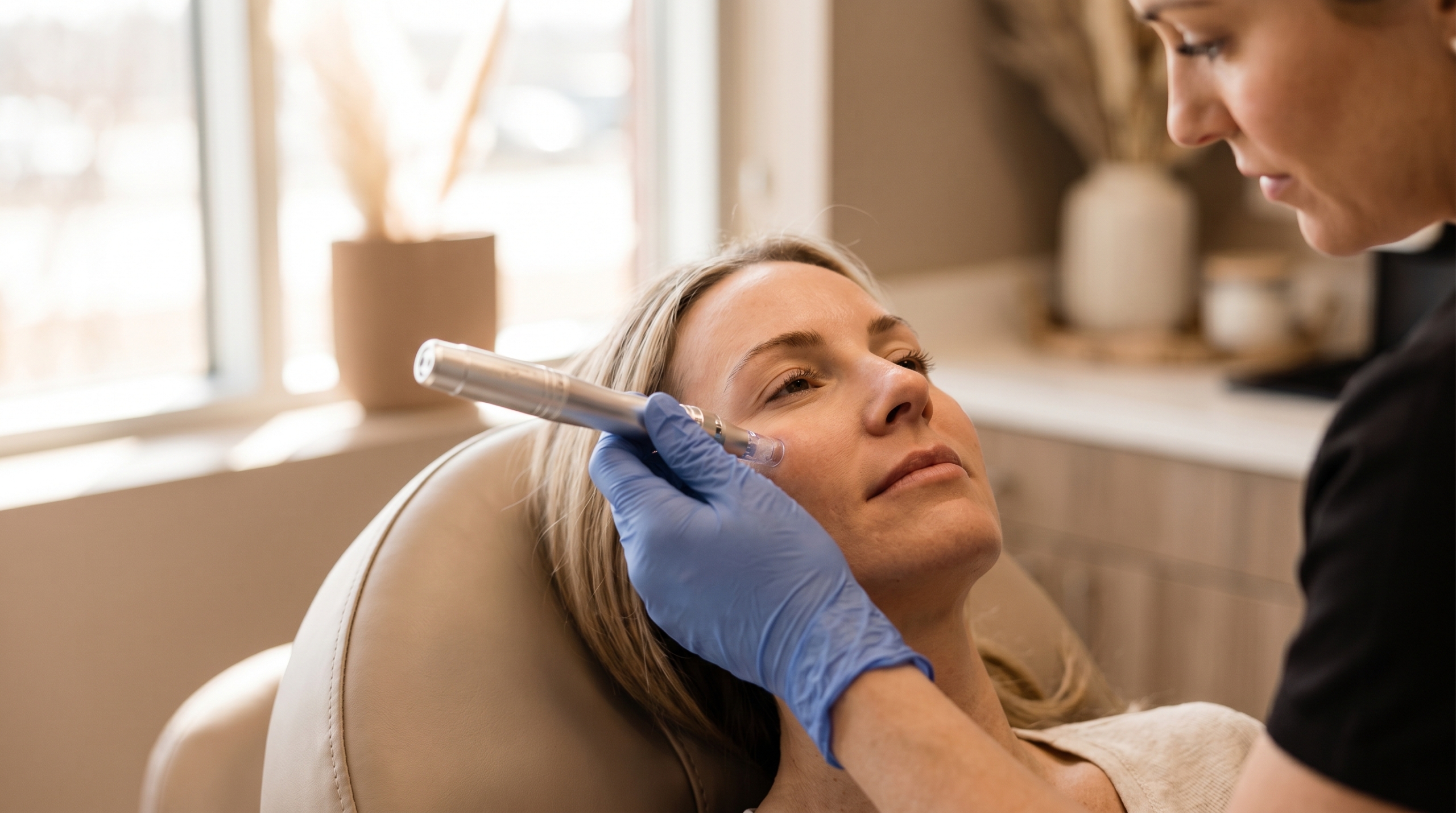
A topical numbing cream is applied before treatment to minimize discomfort. Most clients describe the sensation as a mild warmth or slight tingling. The SkinPen device is passed systematically across the treatment area. A full-face session takes approximately 30 to 45 minutes.
Immediately After

The skin will appear red and feel warm, similar to a mild sunburn. This typically resolves within 12 to 24 hours. Avoid makeup, active skincare ingredients, and sun exposure for the first 24 to 48 hours. Apply a gentle moisturizer and broad-spectrum SPF the following morning.
Results Timeline
Some improvement in skin radiance and texture is typically noticeable within a week as mild inflammation resolves. Significant improvements in scarring, fine lines, and firmness become visible at four to six weeks as collagen production progresses. Most treatment plans recommend a series of three to six sessions spaced four to six weeks apart, with maintenance sessions every three to six months.
Microneedling vs Other Med Spa Treatments
| Microneedling | HydraFacial | Chemical Peel | CO2Lift | |
| Best for | Texture, scars, firmness | Hydration, congestion | Pigmentation, tone | Brightness, event prep |
| Downtime | 12–48 hours redness | None | 1–7 days depending on depth | None |
| Results speed | 4–6 weeks for full effect | Immediate | Days to weeks | Immediate |
| Sessions needed | 3–6 for best results | Monthly | 1–3 depending on depth | Monthly |
| Safe for all tones | Yes — low PIH risk | Yes | Varies by depth and tone | Yes |
Book Microneedling in Franklin, TN

A Moment’s Peace is at 9050 Carothers Pkwy, Suite 108, Franklin, TN 37067. Our medical spa treatments are supervised under the guidance of our medical director, Dr. Sujay Kumar, and performed by licensed estheticians using SkinPen, the only FDA-cleared microneedling device. Book online at amomentspeace.com or call 615-224-0770.
Frequently Asked Questions
How many microneedling sessions do I need to see results?
Some improvement is visible after a single session, but a series of three to six sessions spaced four to six weeks apart produces the most significant results for acne scarring, fine lines, and firmness. Maintenance sessions every three to six months sustain the results.
Does microneedling hurt?
A topical numbing cream applied 20 to 30 minutes before the session significantly reduces discomfort. Most clients describe the sensation during treatment as mild warmth or tingling rather than pain. The SkinPen’s depth calibration means the experience is as comfortable as technically possible for the goals being addressed.
Can microneedling be combined with other treatments?
Yes. Microneedling is commonly combined with a vitamin C or hyaluronic acid serum applied immediately after treatment, as the micro-channels increase active ingredient absorption significantly. It can also be sequenced with other treatments in a broader skincare plan. Your esthetician will advise on timing and sequencing based on your goals.