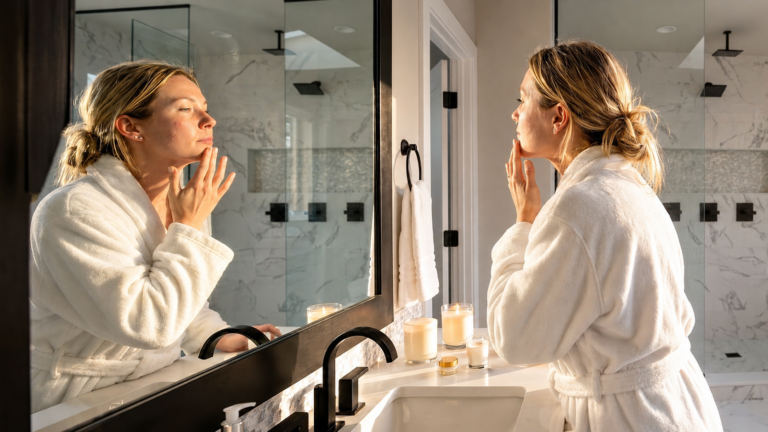
The clearest sign that your skincare routine needs a seasonal update is not the calendar. It’s your skin. When fall arrives and you start noticing tightness after cleansing, more visible fine lines, a dull complexion that didn’t look this way in summer, and patches of flaking around the nose and cheeks, that’s the signal.
The cause is predictable. Humidity drops, indoor heating begins, and the skin starts losing moisture faster than it can replace it. The lightweight products that worked in summer are no longer sufficient. The transition is simple once you understand what’s happening and what to change.
Why Autumn Skin Feels Different

Humidity Drops and the Barrier Works Harder
The skin’s moisture barrier functions best in moderate humidity. When humidity falls below 40 percent, which is common indoors once heating systems activate, the rate of transepidermal water loss increases. The skin loses moisture to the surrounding air faster than it can be replaced through normal sebaceous function.
Research on skin barrier function and environmental conditions confirms that low-humidity environments measurably increase transepidermal water loss and reduce stratum corneum hydration within days of exposure. Your skin is not just feeling dry — it is losing water at a measurably higher rate.
Indoor Heating Compounds the Problem
Central heating systems remove humidity from indoor air. The drier the indoor environment, the more moisture the skin loses even while you sleep. This is why skin conditions including eczema, psoriasis, and rosacea often flare in autumn and winter: the barrier is compromised, and the skin becomes more reactive to everything it encounters.
Summer Sun Damage Accumulates
The surface layer of skin accumulates UV damage, hyperpigmentation, and uneven texture over summer. Autumn is when this damage becomes most visible as the post-summer glow fades and the underlying changes in pigment and texture emerge. This is also the ideal time to address it with professional treatment before the skin fully enters its drier winter state.
What to Change in Your Routine
Switch to a Cream Cleanser in the Evening
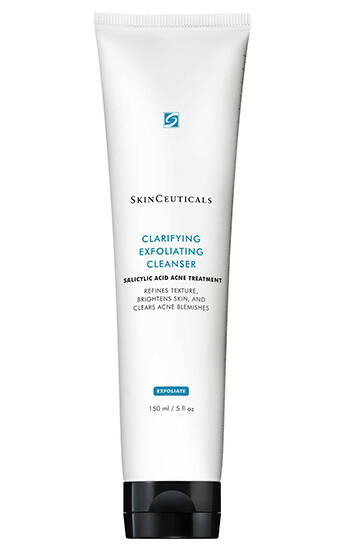
Foaming and gel cleansers are excellent in summer when excess oil and sweat need stripping. In autumn they can over-cleanse, removing natural oils the barrier needs to retain. A mild cream cleanser in the evening retains moisture while still removing the day’s buildup. Keep a gel or balancing formula for morning if needed.
Add a Hyaluronic Acid Serum
Hyaluronic acid is a humectant: it draws water from the surrounding environment and from the deeper skin layers to the surface. Research confirms it significantly improves stratum corneum hydration with consistent use. Apply it to damp skin immediately after cleansing, before your moisturizer, to maximize absorption. In low-humidity environments, layer it under an occlusive moisturizer to prevent it from drawing moisture out of the skin rather than retaining it.
Upgrade to a Ceramide-Rich Moisturizer
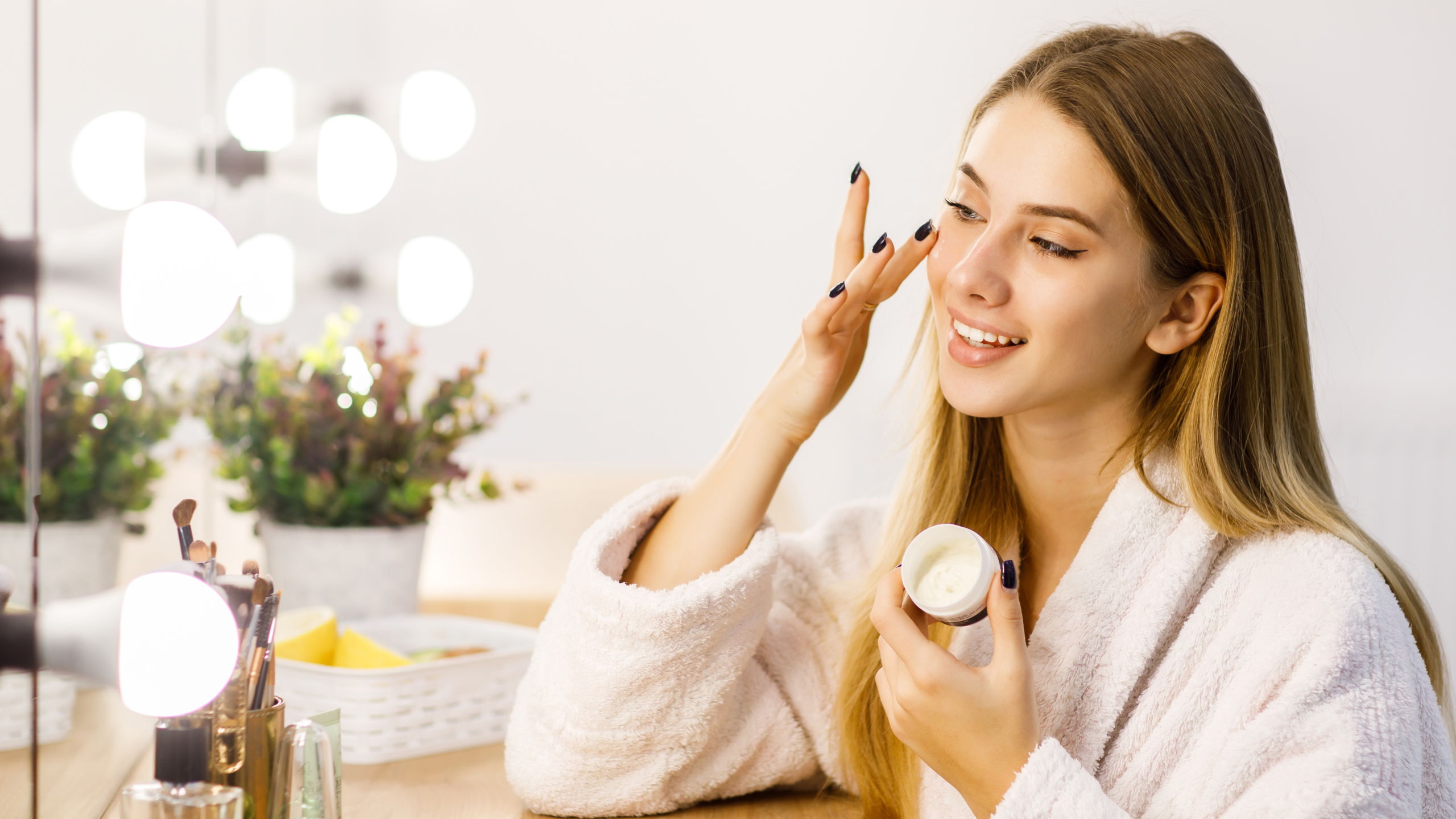
Ceramides are lipid molecules that form the primary structural component of the skin barrier. The American Academy of Dermatology identifies ceramide-containing moisturizers as the most effective category for repairing and maintaining a compromised barrier. Switch from a lightweight lotion to a cream or balm formula that includes ceramides, fatty acids, and cholesterol — the three components that constitute the barrier’s intercellular matrix.
Add a Richer Evening Cream or Face Oil
The skin does its most active cellular repair during sleep. An evening cream with peptides, niacinamide, or a squalane-based oil applied as the final step locks in hydration and supports the overnight repair process. This is the step most commonly skipped in summer that makes the biggest difference in autumn and winter skin quality.
Continue SPF Every Morning
UVA rays, the primary cause of photoaging, penetrate clouds, windows, and glass year-round. The American Academy of Dermatology explicitly recommends SPF 30 or higher in autumn and winter for exactly this reason. UVA intensity does not drop as dramatically as UVB intensity, which means the aging and pigmentation-causing radiation remains relevant throughout the colder months.
Reintroduce Retinol if You Paused It in Summer
Many estheticians recommend reducing retinol frequency in summer because photosensitivity increases in heat and UV exposure. Autumn is the ideal time to reintroduce it or increase frequency. Cooler temperatures reduce sensitivity, and the longer nights mean more uninterrupted overnight processing time. If you are new to retinol, autumn is the best season to start.
The Autumn Facial: Why Fall Is the Best Time to Book
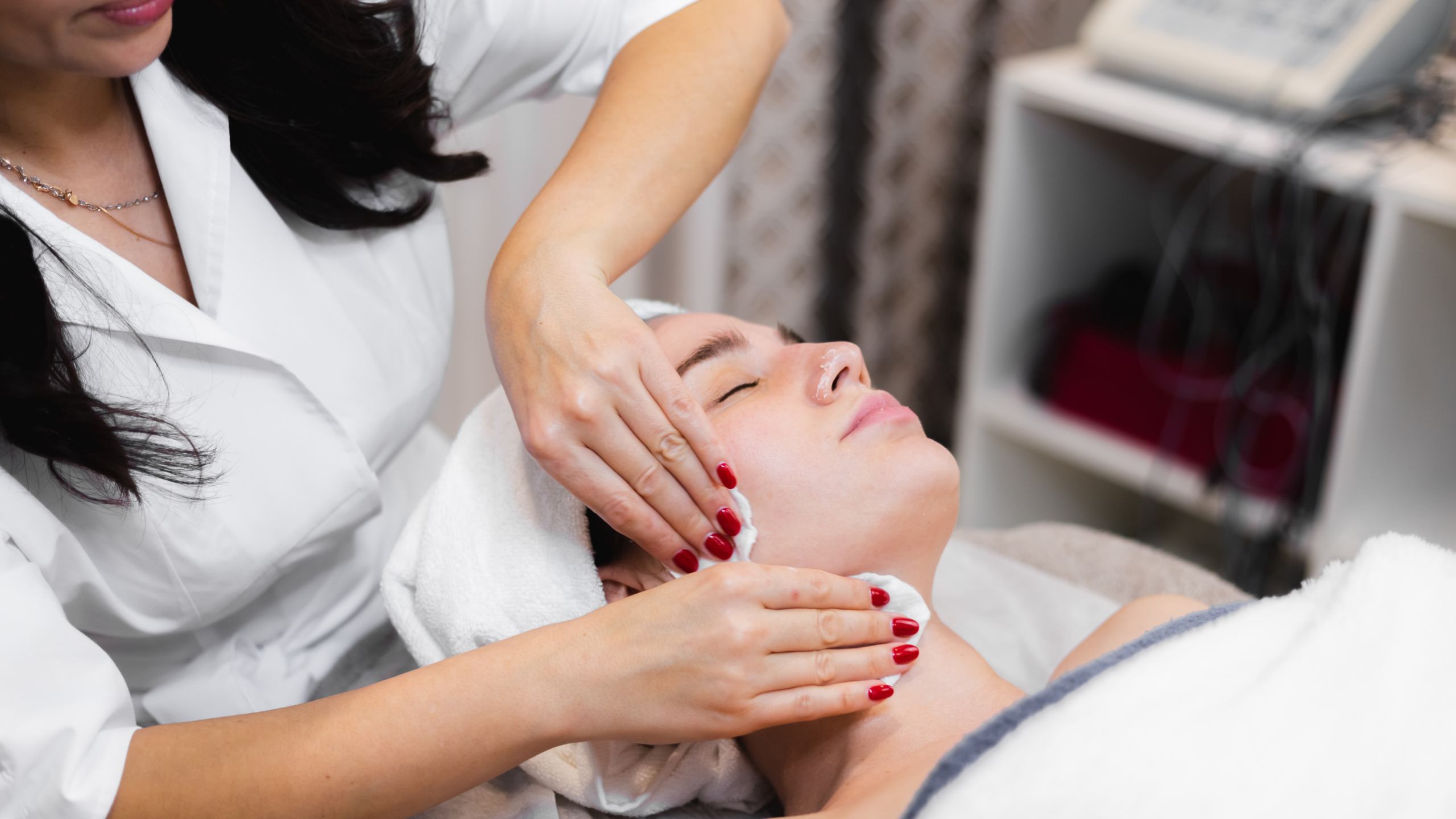
A professional facial in September or October addresses two priorities simultaneously: it removes the summer’s accumulated surface damage, dead skin cells, hyperpigmentation, and congestion, and it assesses your skin’s current barrier condition so your esthetician can recommend the right products and frequency for the months ahead.
A light chemical peel in autumn is particularly effective because the skin is not acutely sun-sensitized, UV exposure is decreasing, and the post-peel healing environment is optimal. The results from an autumn peel carry through the clearer, lower-UV winter months with maximum longevity.
Our estheticians at A Moment’s Peace offer personalized consultations at every facial appointment. If you’re not sure which fall treatment is right for your skin, let your esthetician assess it at the start of your session and recommend accordingly.
The Autumn Skincare Transition Checklist
| Step | Summer | Autumn Swap |
| Cleanser | Foaming or gel formula | Cream or balancing formula (evening) |
| Serum | Vitamin C or niacinamide | Add hyaluronic acid on damp skin first |
| Moisturizer | Lightweight lotion | Ceramide-rich cream or balm |
| Evening step | Light moisturizer or nothing | Richer evening cream or face oil |
| Retinol | Reduced or paused | Reintroduce or increase frequency |
| SPF | Daily SPF 30+ | Continue daily — UVA does not stop in autumn |
| Professional treatment | Monthly facial | Book a fall facial with light peel or brightening treatment |
Book a Fall Facial in Franklin, TN
A Moment’s Peace is at 9050 Carothers Pkwy, Suite 108, Franklin, TN 37067. Book a facial appointment for the transition season and let our estheticians assess where your skin needs attention after summer. Book online at amomentspeace.com or call 615-224-0770.
Frequently Asked Questions
When should I change my skincare routine for fall?
When you start noticing tightness after cleansing, increased flakiness around the nose and cheeks, or a dull complexion that doesn’t respond to your usual products, it’s time to switch. For most people in the Nashville and Franklin area this happens in late September or early October as indoor heating activates.
What is the most important skincare change for autumn?
Upgrading your moisturizer to a ceramide-rich cream is the single most impactful switch. Ceramides are the primary structural component of the skin barrier, and replenishing them with a topical formula significantly improves the skin’s ability to retain moisture in low-humidity conditions.
Is a professional facial necessary in autumn?
Not strictly necessary, but highly beneficial. Autumn is the best time of year to address accumulated summer sun damage, address congestion, and calibrate your product routine for the colder months with professional guidance. Many estheticians consider it the most strategic time to schedule a facial.