Getting your first massage should feel like something to look forward to, but it’s natural to have a few questions before your appointment.
You might wonder what to wear, how much clothing to remove, whether you need to talk during the session, or what happens once you’re on the massage table. Knowing what to expect ahead of time can help you feel more comfortable and confident walking into your first appointment.
From the initial conversation with your massage therapist to what you may feel afterward, here’s what you need to know about your first massage experience.
What to Expect During Your First Massage Session
Massage sessions tend to follow a consistent structure. Knowing that ahead of time removes a lot of the uncertainty.
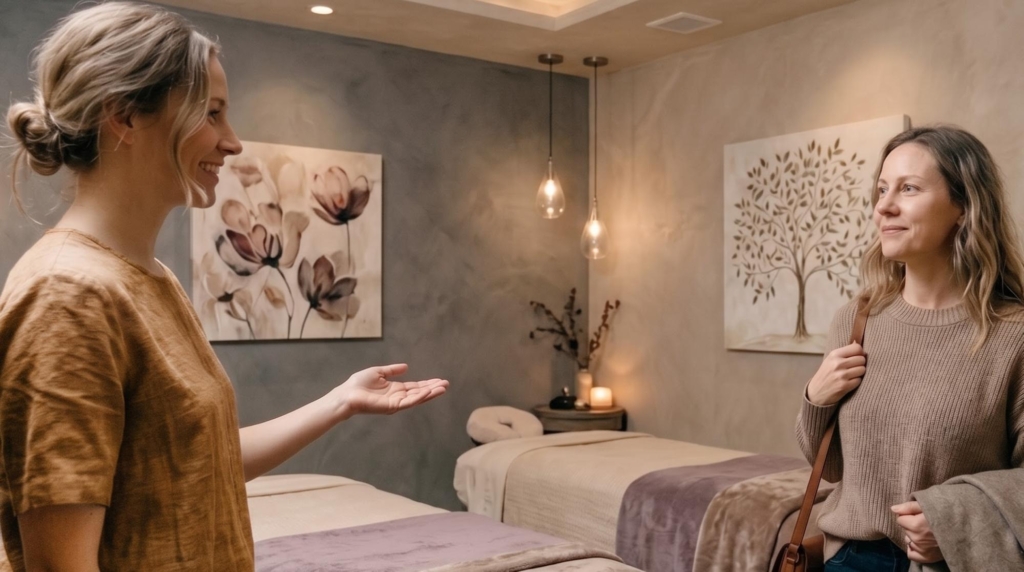
The Intake Conversation and Why It Matters
Before the session begins, your therapist will ask a few questions. This part is often brief, but it plays an important role in shaping how the massage is done.
You’ll usually be asked about:
- Areas of tension, discomfort, or stiffness
- Past injuries, surgeries, or medical conditions
- Pressure preferences, if you have any
- Whether this is your first massage
You don’t need detailed explanations, but it helps to be specific about what you’re experiencing.
A simple “my shoulders feel tight” or “my lower back has been bothering me” gives your therapist a useful starting point. It’s also important to mention any health conditions, medications, allergies, or recent injuries that could affect your session.
In practice, this conversation helps your therapist understand what needs attention and whether any adjustments are necessary. It also gives you a chance to raise concerns before the massage begins.
Getting Settled on the Table
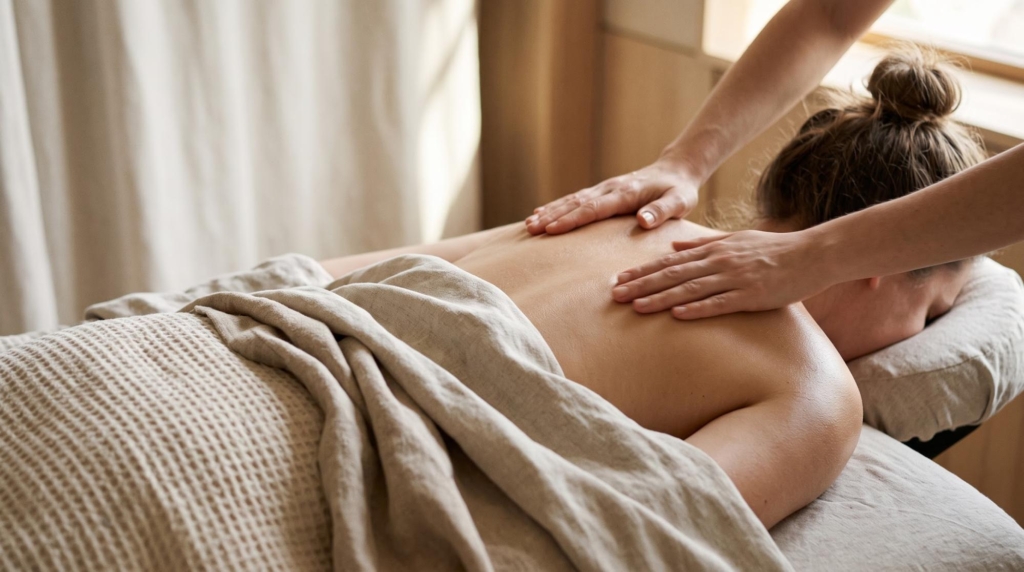
After the conversation, you’ll be shown to a private room and given time to get settled. The therapist steps out so you can undress to your comfort level and lie under the sheet.
Draping is standard practice. Only the area being worked on is uncovered at any time, following professional massage guidelines that help maintain privacy and comfort.
If you’re unsure how to position yourself or what to do with your arms, that’s normal. Therapists guide first-time clients through this regularly, and small adjustments happen throughout the session.
During the Massage: What You’re Actually Expected to Do
One of the most common misconceptions is that you need to “do something right” during a massage. In reality, your role is simply to notice how your body feels and speak up if something needs adjusting.
That might mean asking for lighter pressure, a different position, or a change in room temperature. You can also ask to stop at any time. Therapists expect feedback because it helps them adjust the session to your comfort level.
What to Wear to Your First Massage
Clothing is one of the most common concerns for first-time clients because expectations aren’t always clear until you experience it.
What Most People Actually Do
Most clients undress to their comfort level and lie under the sheet. Some keep their underwear on, while others prefer to remove it. There isn’t one correct approach, especially when it’s your first visit.
Massage is structured around accessing muscles while maintaining privacy through draping. Your therapist will adjust based on what you’re comfortable with, and you can always ask questions before the session begins.
What to Tell Your Massage Therapist (and What You Don’t Need to Know)

You don’t need a clear plan or a perfect explanation to benefit from massage. Most sessions are shaped by simple observations rather than detailed input.
What Actually Helps Your Therapist
It helps to mention any areas that feel tight or sore, along with previous injuries, surgeries, medical conditions, or medications that may affect your session. Allergies, pregnancy, and sensitivities to pressure or touch are also worth sharing.
You don’t need to explain everything in detail. The goal is to give your therapist enough information to make appropriate adjustments and avoid areas you’d rather not have worked on.
What You Don’t Need to Figure Out First
You don’t need to know which type of massage is best or whether your tension comes from stress or physical activity. Simply describe what you notice, even if it’s just stiffness or discomfort in a particular area.
Your therapist can help you understand the available massage options without expecting you to diagnose the problem yourself.
How a First Massage Usually Feels (During and After)
The experience of a first massage is often different from what people expect.
During the session, some people relax quickly. Others take time to settle in. It’s also common to feel slightly aware or unsure at first, especially if it’s unfamiliar.
After the session, you might notice different changes depending on how your body responds.
| Timing | What People Often Notice |
| Immediately after | Lightness, calm, or neutral feeling |
| Later that day | Subtle relaxation or fatigue |
| Next day | Possible changes in stiffness, movement, or sleep |
Some people notice changes right away, while others feel more relaxed or less stiff later in the day. Responses vary, and not everyone experiences an immediate difference.
Common First-Time Concerns (That Are Completely Normal)
Some questions don’t always get asked out loud, but they come up frequently. Feeling awkward at the beginning is normal, and many people settle in once the massage starts. Falling asleep can happen, too, especially as you become more relaxed.
Not feeling immediate relief doesn’t necessarily mean the massage wasn’t helpful. Responses vary, and some people notice subtle changes later in the day rather than right after the session.
How Long Your First Massage Should Be
A 60-minute massage is a common starting point because it allows time to address several areas without feeling rushed.
Shorter sessions can work well for targeted concerns, while 75- or 90-minute appointments offer more time for a full-body experience. The right length depends on your goals and comfort level.
If you’re still deciding on a treatment, learning what to expect from a Swedish massage can help you narrow down your options.
What You Can Learn From Your First Massage
Many people expect their first massage to solve everything at once. In reality, it often works more like a starting point. You may notice areas of tension you hadn’t paid attention to before or become more aware of how your body responds to different techniques.
At A Moment’s Peace Salon & Day Spa in Franklin, your first visit is an opportunity to discuss your needs and preferences with your therapist. That initial conversation helps guide the session without relying on a one-size-fits-all approach.
| For a deeper look at how this evolves, see How Often Should You Get a Massage for Real Health Benefits? |
Conclusion: Your First Massage Is a Starting Point
Your first massage doesn’t need to be a perfect experience to be worthwhile. You don’t need to know every technique or have a clear idea of how it should feel. Your therapist is there to guide the session, answer questions, and make adjustments based on your comfort.
The important thing is to communicate what feels right for you. With that first experience, it becomes easier to understand what you prefer and what to ask for next time.
Ready to experience your first massage? Contact A Moment’s Peace Salon & Day Spa in Franklin to ask questions, explore your options, or take the next step toward scheduling your appointment.
First-Time Massage FAQs
Do I need to talk during the massage?
No. Silence and conversation are both normal. You can relax without speaking unless something needs adjusting.
What if I don’t know what kind of massage to choose?
That’s common. Describing how your body feels is usually enough for the therapist to guide the session.
Can I ask for changes during the massage?
Yes. Adjustments to pressure, positioning, or comfort are expected and encouraged.
Is it normal to feel emotional after a massage?
Sometimes. Some people experience emotional responses during or after a massage. Everyone responds differently, and feeling emotional is not a requirement for benefiting from a session.
Is massage okay if I’ve never had one before?
Yes. Massage therapists regularly welcome first-time clients and guide them through the process. However, make sure to share any medical conditions, recent injuries, or concerns beforehand.