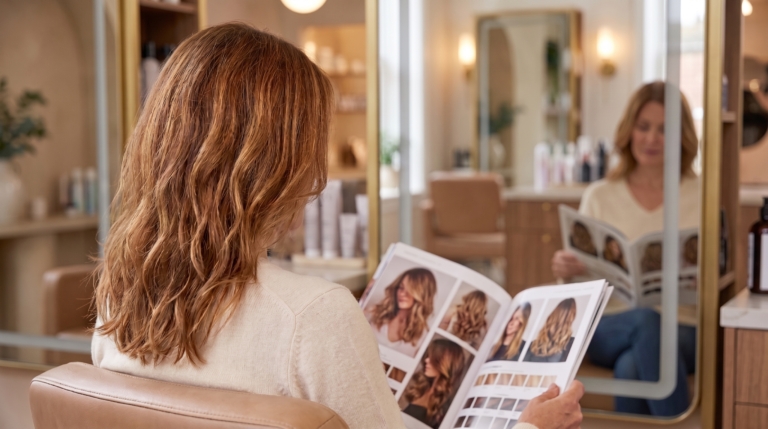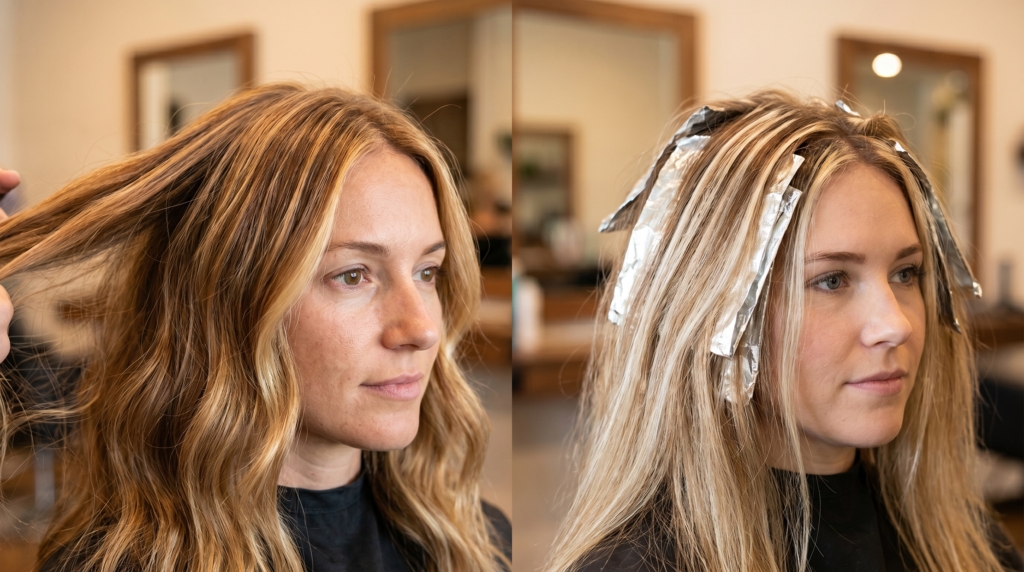
Both balayage and traditional foil highlights add dimension, brightness, and life to your hair. They are not interchangeable, though. The technique, the result, the maintenance schedule, and the cost structure are different enough that choosing the wrong one for your goals means either being disappointed with the outcome or spending more time and money maintaining it than you expected.
The colorists at A Moment’s Peace work with both techniques daily. Here is a clear breakdown to help you decide before your next color appointment.
What Is Balayage?
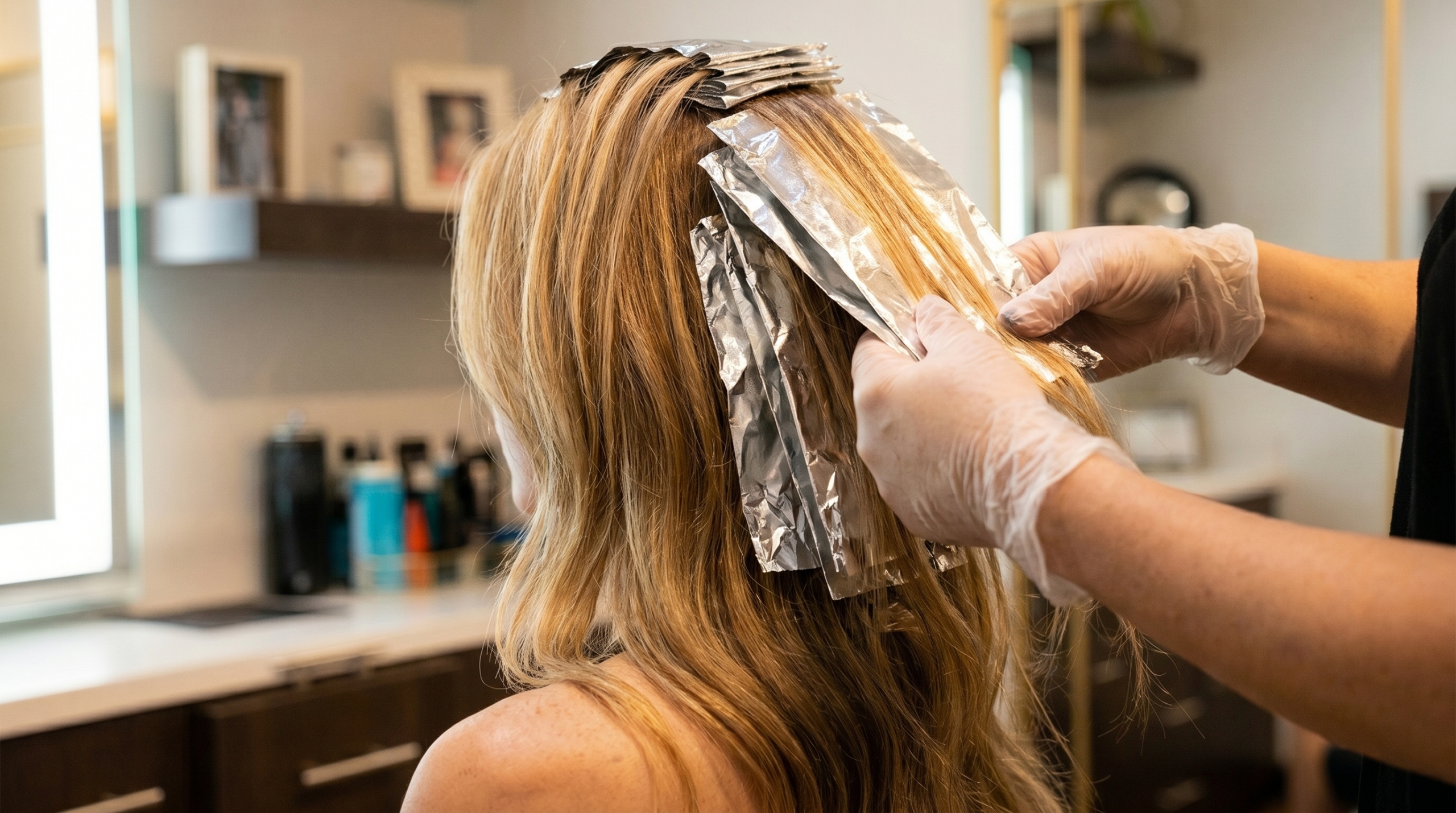
Balayage is a French word meaning to sweep or to paint. The technique involves a colorist freehand-painting lightener or color directly onto sections of hair without foils, working in sweeping strokes from mid-length to ends with lighter application at the roots. The result is a gradual transition from darker roots to lighter ends with no hard line of demarcation.
Because the color is hand-painted rather than applied uniformly through foils, the result is multi-tonal and dimensional rather than uniform. No two balayage results are identical, which is part of why the look reads as natural rather than colored.
What Are Traditional Foil Highlights?
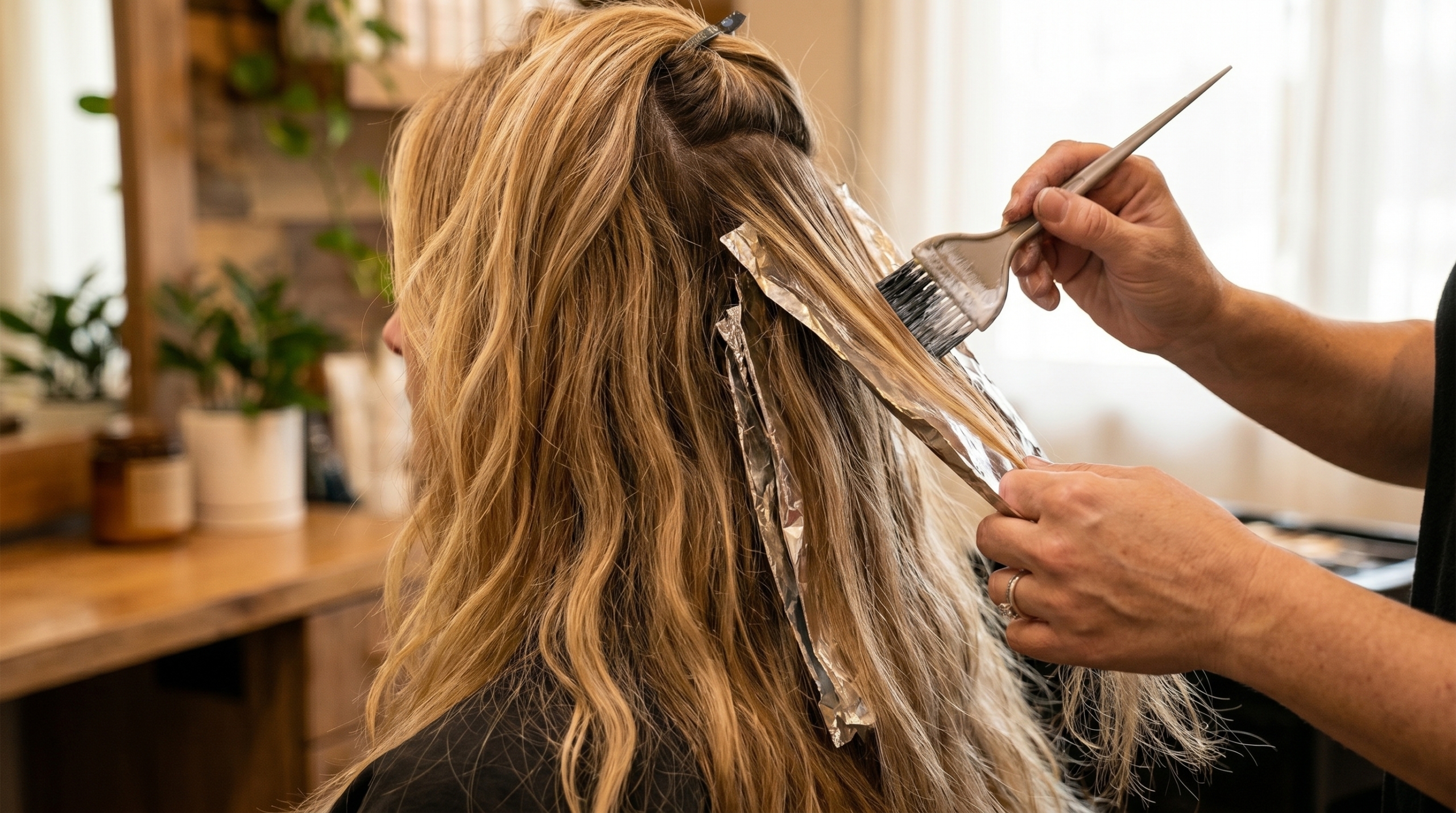
Traditional highlights use foil packets to separate sections of hair and apply lightener or color with more control and uniformity. Because the foil creates heat and prevents the lightener from interacting with neighboring sections, foil highlights typically produce brighter, higher-contrast results than balayage.
Full foil highlights cover the entire head for a consistently bright result. Partial highlights concentrate color around the face and on the top sections for a more subtle effect without covering the whole head.
Balayage vs Foil Highlights: Side-by-Side Comparison
|
|
Balayage |
Foil Highlights |
|
Application |
Freehand painted, no foils |
Section and foil technique |
|
Result |
Soft, natural, multi-tonal, sun-kissed |
Uniform, brighter, higher contrast |
|
Grow-out |
Gradual and natural, no harsh root line |
Noticeable root line at 6–8 weeks |
|
Touch-up schedule |
Every 3–4 months |
Every 6–8 weeks |
|
Customization |
Fully bespoke, unique to each client |
Controlled and repeatable |
|
Best for |
Low-maintenance, natural finish, dimensional color |
Maximum brightness, uniform look, precise placement |
|
Hair type |
Works on all lengths; more gradual on shorter hair |
Works on all lengths and types |
|
Color palette |
Natural tones, warm blondes, sun-kissed |
Any color, including platinum and vivid tones |
When Balayage Is the Right Choice
Balayage is the better option if you want a look that grows out gracefully without a visible root line, if you prefer a natural and dimensional finish over a uniform bright result, if you have a busy schedule and want to minimize salon visits, or if you are making a gradual color change rather than a dramatic shift.
It also works particularly well on wavy and textured hair, where the varying light catch across the wave pattern amplifies the multi-tonal effect.
When Traditional Highlights Are the Right Choice
Foil highlights are the stronger option if you want maximum brightness, particularly if you are going platinum or near-platinum, if you want a very specific, controlled placement of color, if you have fine, straight hair and want the most impact per session, or if you prefer a more polished, uniform finish over a natural one.
For clients going from dark brown to very light blonde, traditional foils often achieve the target result faster and more uniformly than balayage can in the same number of sessions.
Can You Combine Balayage and Foil Highlights?
Yes. Many colorists use both techniques in the same appointment to achieve different effects in different sections of the hair. Foils around the face for maximum brightness and balayage through the lengths for a dimensional, blended finish is a popular combination that gives the brightness of traditional highlights with the grow-out behavior of balayage.
This is sometimes referred to as a foilayage and it is particularly effective for clients who want noticeable color but not the commitment of a full foil touch-up every six weeks.
How Hair Type and Length Affect Your Result
Short hair: balayage creates a more subtle effect on short hair because there is less length for the gradient to develop. Traditional highlights often produce more visible impact on short cuts.
Fine hair: fine hair shows color change more dramatically in both directions. Balayage on fine hair can look exceptionally natural. Foil highlights on fine hair can look very bright. Choose based on how much impact you want.
Thick hair: both techniques work well on thick hair. Balayage may require more product and application time to achieve good saturation. Foil highlights provide more control over coverage on very thick hair.
Hair porosity also affects how your hair absorbs and retains color. High-porosity hair takes color quickly but fades faster. Your colorist can advise on a toning treatment or color-safe maintenance routine to extend results.
Choosing Your Colorist
Balayage is a genuinely skilled technique. Because the application is entirely freehand, the result depends directly on the colorist’s eye for placement and their ability to read how the color will develop on your specific hair texture, porosity, and base.
Look for a colorist with a portfolio that shows results on hair similar to yours, not just results on the best-case hair. Our colorists at A Moment’s Peace have years of experience with both techniques and offer consultations before color services so you and your colorist are aligned on the goal before a single stroke is applied.
Book a Color Consultation in Franklin, TN
A Moment’s Peace is at 9050 Carothers Pkwy, Suite 108, Franklin, TN 37067. Our hair color services include balayage, foil highlights, full-color, toning, and glossing. Book a color consultation or appointment online at amomentspeace.com or call 615-224-0770.
Frequently Asked Questions
Is balayage more expensive than highlights?
Balayage is typically priced at a similar level or slightly higher than a full set of foil highlights because of the skill and time involved. However, because balayage requires touch-ups every three to four months versus every six to eight weeks for traditional highlights, the annual cost of maintenance is often lower for balayage clients.
Can balayage be done on dark hair?
Yes. Balayage works on all base colors including dark brown and black. On very dark bases, the lightening process requires more care and may need to be done in stages to achieve the target result without damage. Your colorist will assess your current hair condition and base color before recommending an approach.
How long does a balayage appointment take?
A balayage appointment typically takes two to four hours depending on hair length, thickness, and the degree of lightening required. A consultation before the service allows the colorist to give you a more accurate time estimate based on your specific hair.