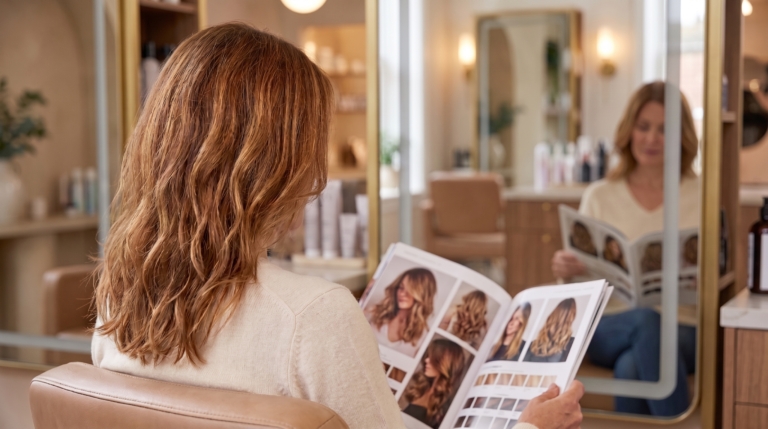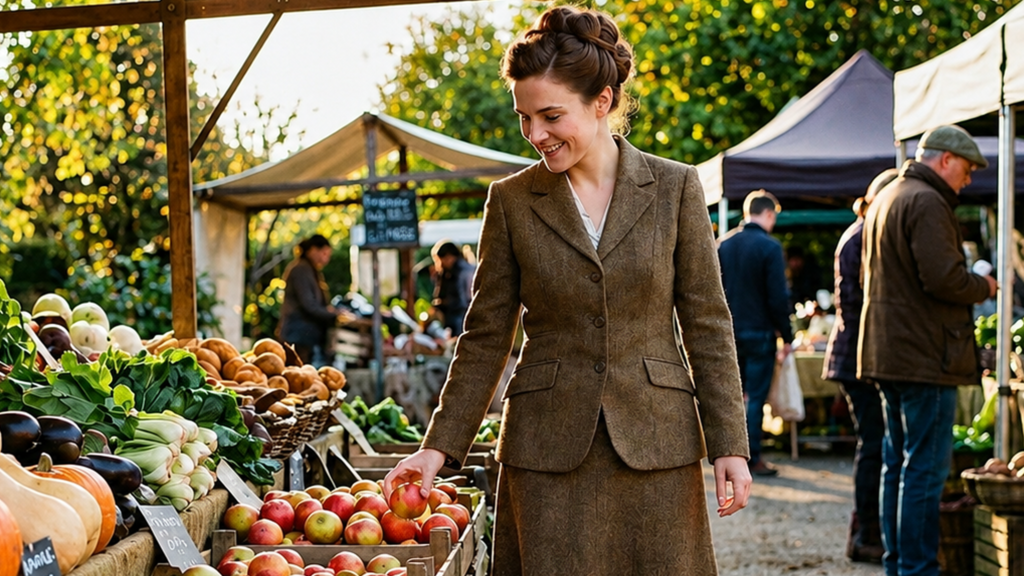
1. Veronica Lake’s Peek-a-Boo Waves (1940s)
Veronica Lake’s signature look started by accident when a strand of hair fell across her face during filming. It stayed. The peek-a-boo wave swept hair low over one eye, created with soft, deep waves that fell to the shoulder.
It became the defining hairstyle of the 1940s femme fatale and influenced the Jessica Rabbit character decades later. The look was so widely copied that the U.S. government asked women in war factories to change their hair, citing safety concerns with machinery.
How to Get It Today
Ask for a shoulder-length cut with soft, deep waves set using a large-barrel curling iron. Part deeply to one side and let the front section fall forward across the cheek. A light-hold wave spray keeps the waves defined without stiffness.
2. Marilyn Monroe’s Platinum Curls (1950s)
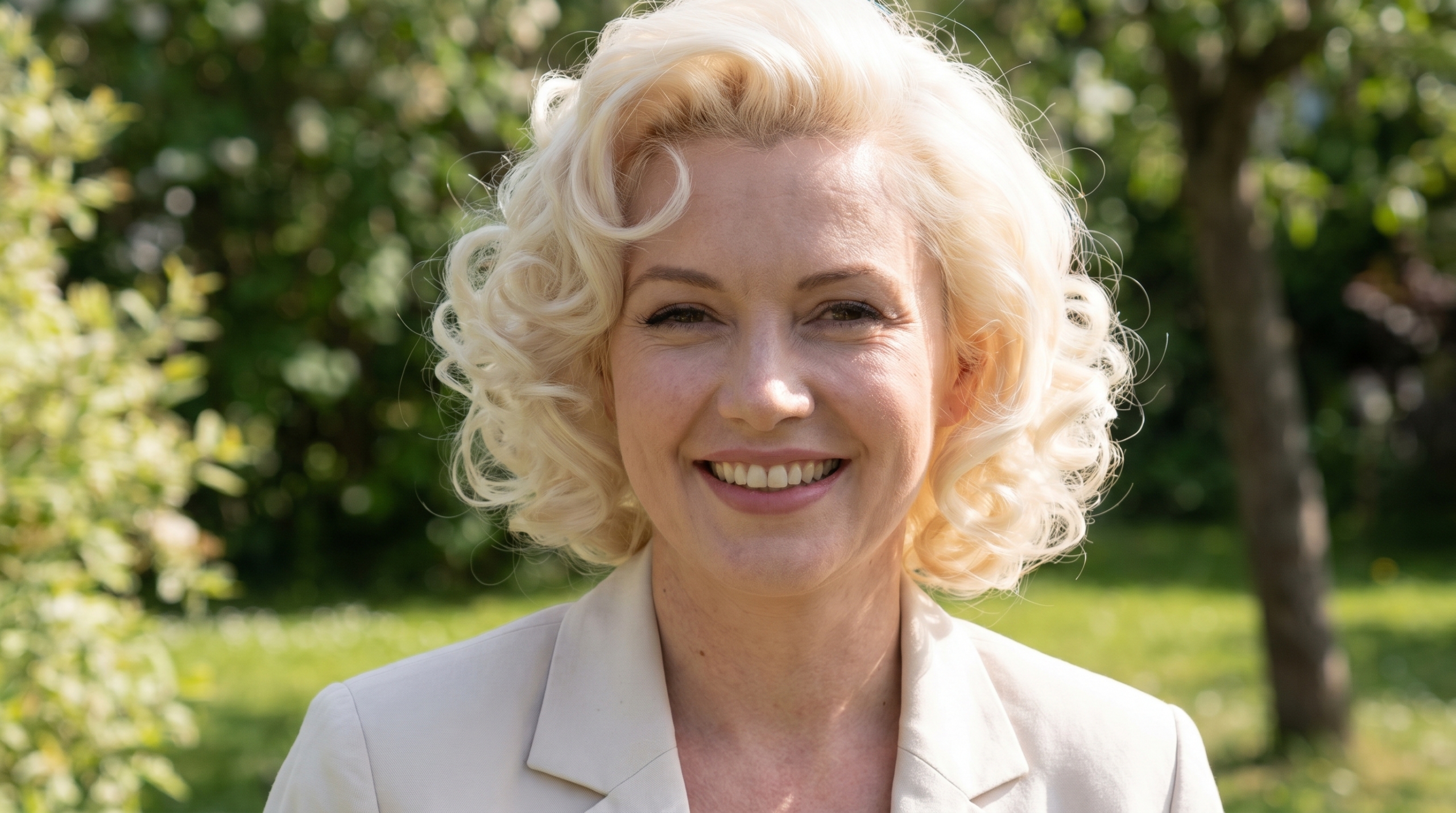
Marilyn Monroe’s hair was as much a character as she was. Short, soft platinum curls with a slightly tousled finish became one of the most recognized silhouettes in entertainment history. Her hair was always moving, always catching light.
She once said: ‘In Hollywood, a woman’s virtue is not nearly as important as her hair.’ She meant it as a joke. She was not entirely wrong.
How to Get It Today
Achieve this look with a short cut at chin length, lightened to a warm platinum blonde. The curl is a soft spiral or finger wave, not a tight coil. A diffuser for fine hair or a large-barrel iron on slightly coarser hair both work well. The finish should be loose and touchable, not set.
3. Audrey Hepburn’s High Updo (1960s)
Audrey Hepburn’s hair in Breakfast at Tiffany’s, the high-piled updo with a tiara, became one of the most copied formal hairstyles in cinema history. The style itself was a classic chignon elevated to the top of the head, which added an almost regal length and elegance to the neck.
The look has appeared at every major awards ceremony for 60 years, always updated slightly but always recognizable.
How to Get It Today
A high chignon or French twist placed at the crown or back of the head recreates this look effectively. The key is volume and height at the base of the style, with any loose pieces around the face intentional rather than accidental.
4. The Bouffant (1960s)
The bouffant represented the 1960s perfectly: voluminous, precise, and slightly exaggerated. It involved backcombing the hair at the crown to achieve extreme volume, then smoothing the surface for a polished finish.
Jacqueline Kennedy made it the defining style of the early decade before it evolved into the more extreme beehive by mid-decade.
How to Get It Today
A modern bouffant involves a light backcomb at the roots and a volumizing blow-dry, then smoothing the outer layer. It works particularly well for fine hair that needs body and for formal occasions where a polished, structured look is appropriate.
5. Farrah Fawcett’s Feathered Layers (1970s)
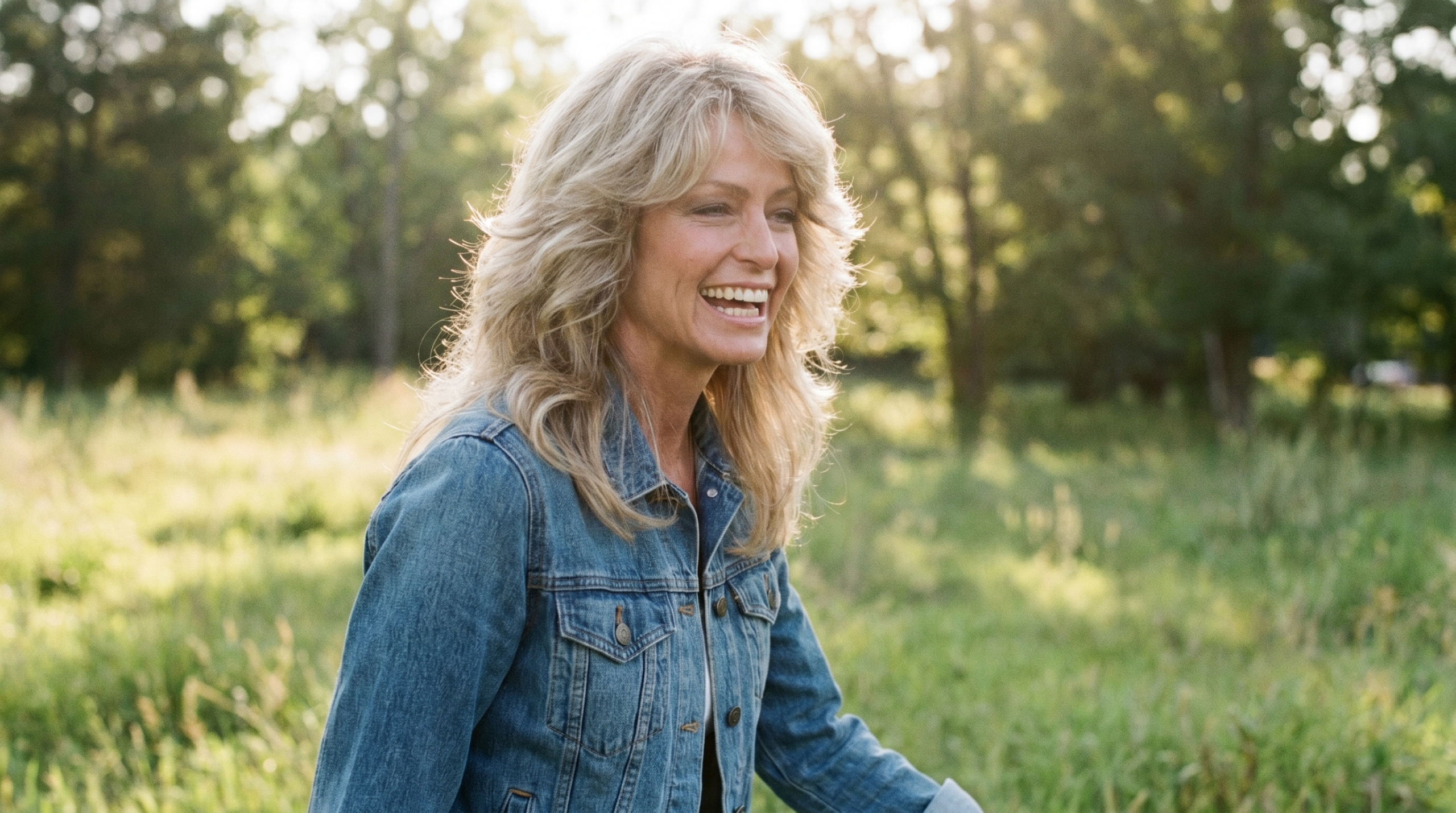
The 1970s belonged to Farrah Fawcett. Her layered, feathered blowout with wings swept back from the face became the decade’s defining image in hair. It appeared on posters in millions of homes and inspired a generation to buy round brushes and blow dryers.
The look worked because it added enormous volume while staying relaxed and effortless in appearance.
How to Get It Today
This look is fully back in 2026. Ask for long layers starting from the cheekbones, feathered outward. A round brush blowout creates the volume and the characteristic lift away from the face. The finish is full and glossy rather than flat.
6. The Shag (1970s)
Jane Fonda and Stevie Nicks both wore versions of the shag in the 1970s: a cut defined by heavy layers, choppy ends, and a slightly undone quality that looked like great hair that just happened to fall that way.
The shag has returned repeatedly in the decades since. It is currently one of the most requested cuts in salons because it works on almost every hair type and requires minimal precision at home.
How to Get It Today
A modern shag features curtain bangs, heavy layering through the mid-lengths and ends, and a slightly textured finish. Air-drying with a curl cream gives it the 1970s undone quality. Blow-drying with a round brush creates a polished version of the same shape.
7. The Power Bob (1980s)
The 1980s brought sharp, architectural haircuts that matched the decade’s attitude. The power bob was blunt, precisely cut, and worn with intention. Diana Princess of Wales and various figures in business and entertainment all wore versions of it.
It communicated authority. It still does.
How to Get It Today
A blunt bob cut at jaw length with no layers is the purest version of this look. Blow dry it smooth and straight. For a slightly softer interpretation, add the lightest curl inward at the ends only. Either way, the precision of the cut is the whole point.
8. The Rachel (1990s)
Jennifer Aniston’s stylists created a layered blowout for her character Rachel Green on Friends that became, arguably, the single most requested hairstyle in salon history. It combined layered lengths, face-framing pieces, and a voluminous blowout that looked both polished and casual.
Salons reported the request daily for years. Some report they still hear it today.
How to Get It Today
Long layers starting at the cheekbones, with face-framing pieces cut slightly shorter, form the base. A round brush blowout that curls outward at the ends creates the volume and movement. The 2026 version is slightly softer than the original, with a less structured finish and more natural movement.
9. Halle Berry’s Pixie Cut (1990s)
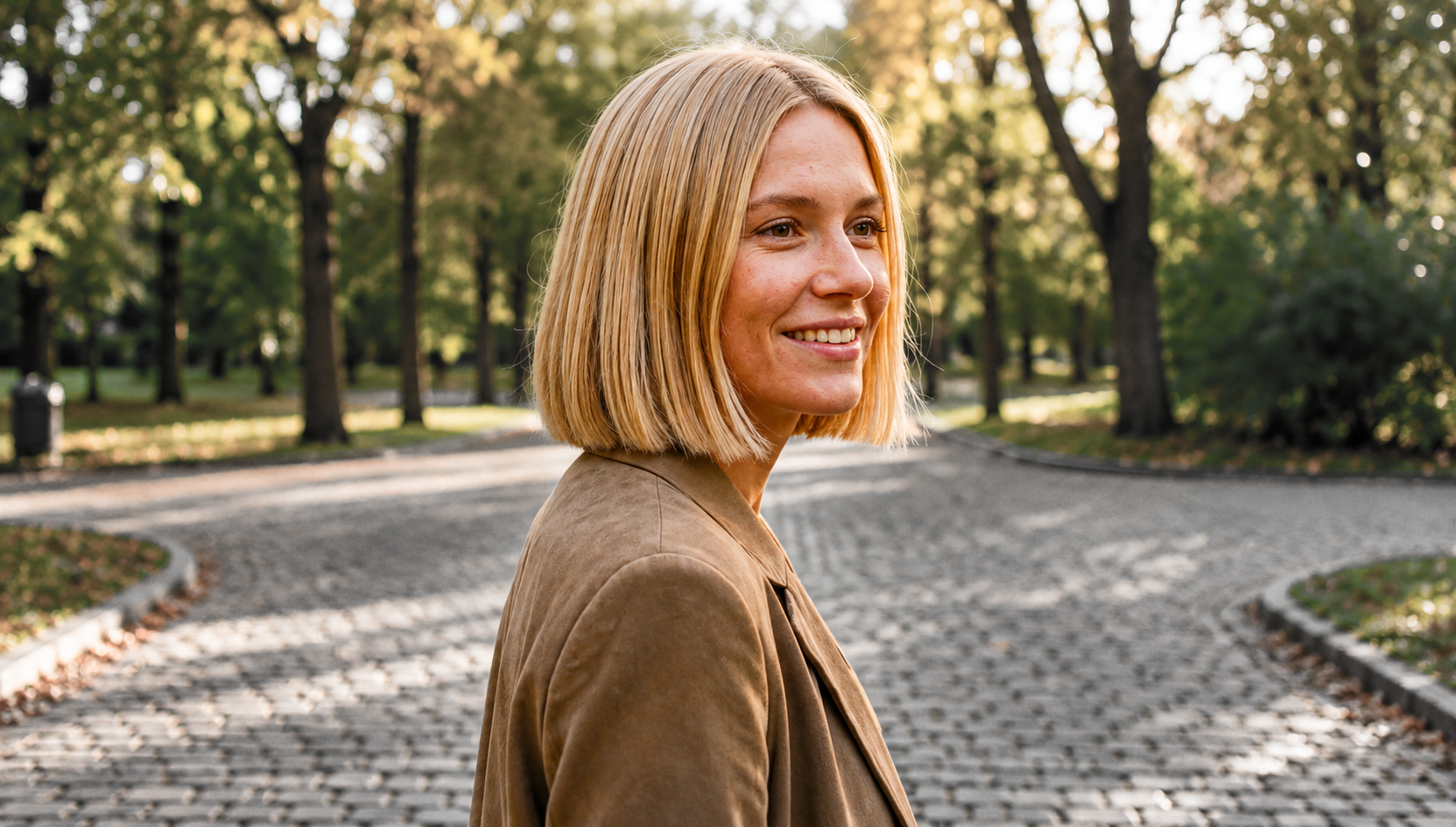
When Halle Berry appeared at the Academy Awards in a close-cropped pixie cut, it shifted the conversation about what short hair could mean. The cut was not a compromise. It was a statement.
Short cuts had existed forever, but Berry’s version inspired a generation of women to consider that a pixie was not the absence of femininity but an expression of confidence.
How to Get It Today
A modern pixie is best understood as a series of decisions: how short at the sides, how much length and texture at the crown, whether to include a fringe. Ask your stylist to assess your face shape first, since a pixie is one of the few cuts where proportions need careful calibration to work at their best.
10. Blake Lively’s Soft Long Waves (2000s to Present)
Blake Lively’s role on Gossip Girl from 2007 to 2012 featured hair that changed constantly, but she always returned to the same signature: long, soft, voluminous waves with a warm blonde tone. The style was endlessly photographed and copied because it managed to look both effortless and deliberate.
Her technique was to tie her hair in a loose ballerina bun while still damp, then let it down later for natural, softly defined waves with lift at the roots.
How to Get It Today
Long layers, a warm dimensional blonde or bronde tone, and waves created with a large-barrel iron curled away from the face recreate this look. The key is not uniformity. Some pieces should be slightly tighter, some barely touched. The result reads as real rather than styled.
Book Your Appointment in Franklin, TN
Whether you want to recreate a classic or use these looks as inspiration for something current, our stylists at A Moment’s Peace can guide you to exactly the right version for your hair type and face shape.
Find us at 9050 Carothers Pkwy, Suite 108, Franklin, TN. Book online or call 615-224-0770.