Most people do not question whether skincare matters. They question whether professional facials are actually necessary.
With so many serums, exfoliants, devices, and routines available for home use, it is easy to assume that consistent at-home care should be enough. This is why searches like “professional facial vs home care,” “are facials worth it,” and “facial Franklin TN” often come with hesitation.
The real question is not whether skincare works. It is whether professional treatments deliver results that cannot realistically be achieved at home.
Professional facials are not a replacement for at-home skincare. They provide assessment-driven treatment, controlled exfoliation, and barrier-focused care that cannot be fully replicated through products alone. The most effective approach combines both.
This guide explains the differences, the limits of home routines, and when professional treatments begin to matter.
Are Professional Facials Better Than At-Home Skincare?
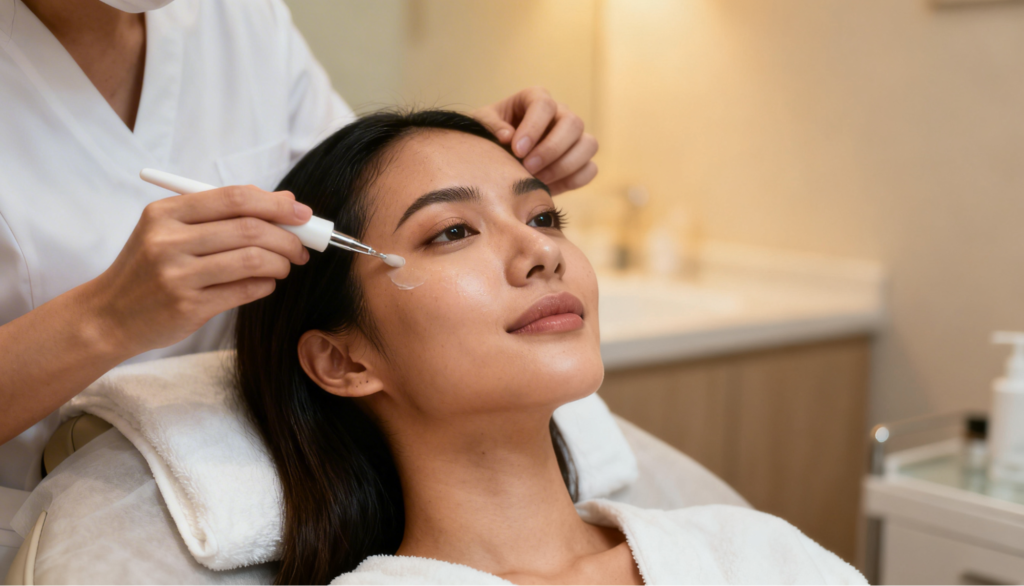
At-home skincare is essential. Daily cleansing, moisturizing, and sun protection form the baseline of healthy skin. However, at-home care and professional facials serve different roles.
Home routines are often fixed. Products are selected based on past experience, recommendations, or trends, and results are evaluated over time. Professional facials are responsive. A licensed esthetician adjusts treatment intensity, exfoliation level, and hydration based on how the skin reacts during the session.
This matters because skin is not static. Stress, sleep, humidity, and hormonal changes can shift barrier function and inflammation levels quickly.
Professional treatments respond to current skin behavior. At-home routines respond to past assumptions.
Professional Facials vs At-Home Skincare: Side-by-Side Comparison
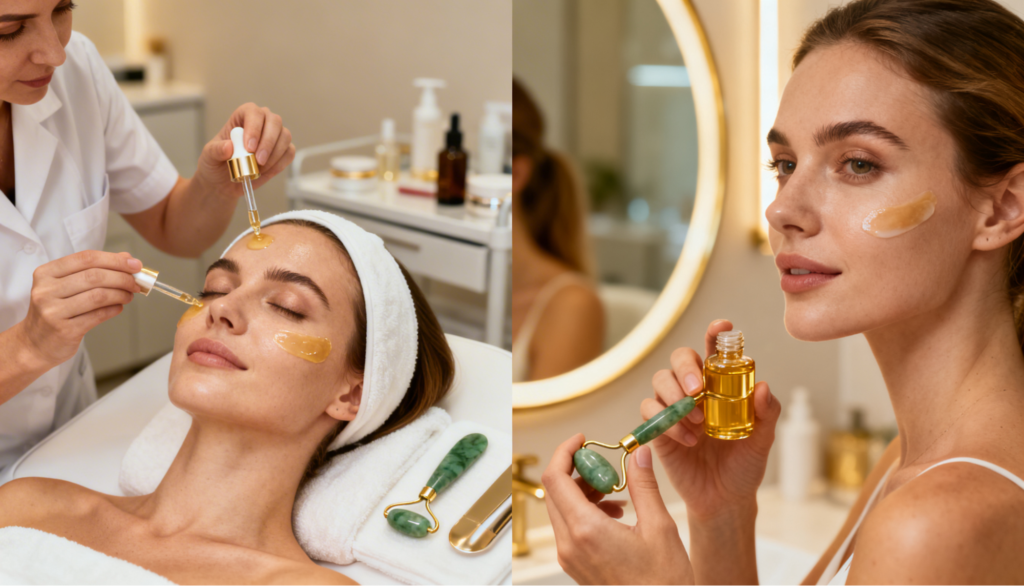
| Factor | At-Home Skincare | Professional Facials |
| Assessment | Based on self-assessment | Real-time professional evaluation |
| Exfoliation control | Fixed, often overused | Adjusted during treatment |
| Product absorption | May be affected by buildup | May improve with proper skin preparation |
| Barrier impact | Can be disrupted over time | Designed to support recovery |
| Results timeline | Gradual, sometimes inconsistent | More controlled and cumulative |
This comparison highlights why both approaches exist. One maintains. The other corrects and guides.
The Limits of At-Home Skincare
At-home routines are effective, but they tend to plateau. Exfoliation is one of the most common issues. Without real-time feedback, it is easy to over-exfoliate or not exfoliate enough. The American Academy of Dermatology provides guidance on how to safely exfoliate at home.
Dermatology research links repeated barrier disruption to increased transepidermal water loss (TEWL), which is associated with dryness, sensitivity, and inflammation.
Product performance is another limitation. As buildup accumulates, absorption becomes uneven. Even well-formulated products may sit on the surface rather than penetrate effectively. This often leads to stronger products being added instead of addressing the underlying issue.
There is also the issue of tolerance. Skin can handle low-level irritation for a while without obvious signs, but over time this can weaken the barrier and make skin more reactive. These patterns explain why routines that once worked can stop delivering results.
What Professional Facials Do Differently
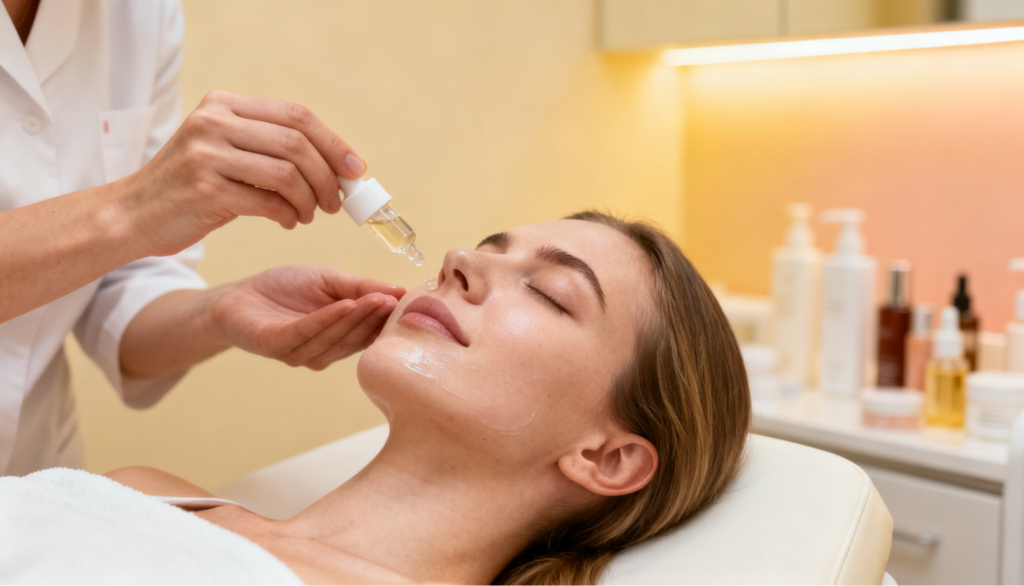
Professional facials are designed to work with skin physiology rather than push through it. An esthetician evaluates hydration, congestion, inflammation, and sensitivity through both observation and touch. This allows adjustments to be made during the treatment, not after.
Exfoliation is controlled. Stimulation is intentional. Recovery is built into the process.
Barrier support is central. Research links impaired skin barrier function to various skin concerns, including irritation, sensitivity, and acne. Professional facials are structured to support barrier function without overwhelming the skin.
At A Moment’s Peace Salon & Day Spa, treatments such as the European Custom Facial and HydraFacial address different skin concerns through personalized care.
Short-Term vs Long-Term Results: What Actually Changes
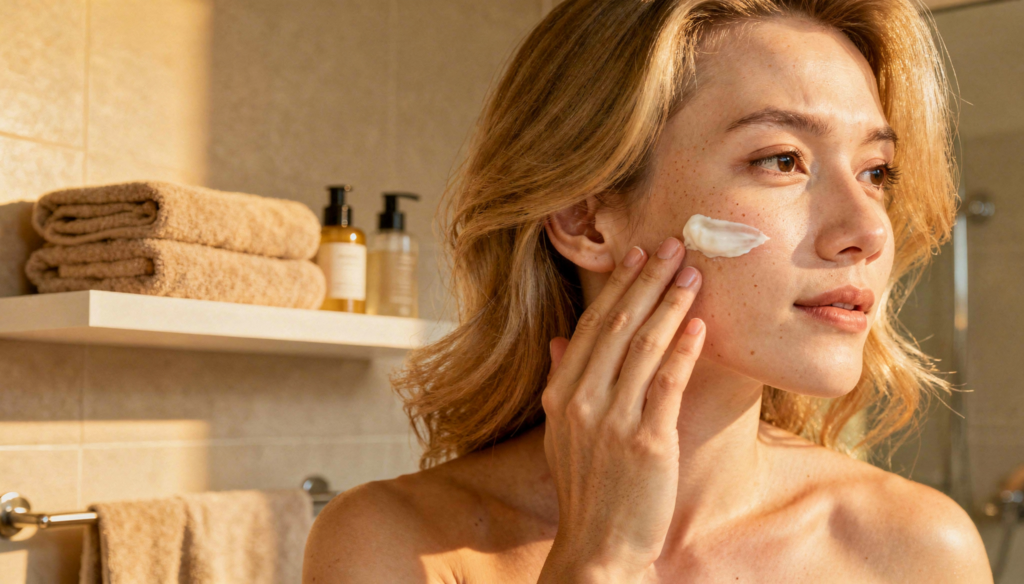
After a single facial, most results are visible but temporary. Skin often feels smoother, looks brighter, and appears more hydrated. These changes are primarily surface-level.
Long-term results develop differently. With consistent, well-spaced treatments, skin tends to become more stable. Hydration is easier to maintain. Texture becomes more even. Products perform more predictably.
This distinction is important. It shifts the perception of facials from occasional treatments to part of a longer-term strategy.
Are Professional Facials Worth the Cost?
Facials are often compared to the cost of skincare products, but they serve a different purpose.
At-home routines rely on trial and error. Professional treatments reduce that guesswork by identifying what the skin needs in real time.
For many people, this leads to fewer unused products, less over-exfoliation, and more consistent results over time. The value of a facial comes from precision. It is not just the treatment itself, but the ability to adjust based on what the skin is actually doing.
Why People Research Facials but Delay Booking
Facials are often delayed because the outcome feels uncertain. People worry about irritation, unexpected breakouts, or whether the results will justify the cost. Others believe their current routine should be enough if they stay consistent.
Clarity tends to remove that hesitation. Once it becomes clear that facials complement home care rather than replace it, the decision becomes less about risk and more about timing.
When At-Home Care Is Enough and When It Is Not
At-home skincare is usually enough when skin is stable, hydrated, and responding predictably. It becomes less effective when patterns begin to shift.
Breakouts may increase. Skin may feel persistently tight or reactive. Texture may become uneven despite consistent care. Products may stop delivering noticeable improvement.
These changes may indicate a skin imbalance rather than a failure of the skincare routine. In many cases, the skin needs recalibration rather than stronger products.
For ongoing irritation or skin concerns, the American Academy of Dermatology recommends consulting a board-certified dermatologist.
How Professional Facials and Home Care Work Together
The most effective skincare strategies combine both approaches. Professional facials reset skin conditions by addressing buildup, hydration, and barrier function. At-home routines maintain those improvements between treatments.
Professional guidance can help people understand their skin’s needs and make more informed skincare decisions.
People are less likely to overuse actives or switch products unnecessarily when they understand what their skin needs. Over time, this combination leads to more stable, resilient skin.
Who Benefits Most From Professional Facials?
Facials are most useful during periods of change. This includes times when skin becomes inconsistent, more reactive, or less responsive to familiar routines. Stress, hormonal shifts, environmental changes, and aging can all contribute to these changes.
Rather than being tied to age or trends, facials are most relevant when skin behavior shifts and requires a more adaptive approach.
How This Connects to Facial Services in Franklin, TN
Most people begin by understanding the difference between home care and professional treatment before choosing a provider.
Once that difference is clear, the decision becomes more practical. The focus shifts to how treatments are performed rather than what they are called.
For those exploring facial services in Franklin, TN, a consultation-led approach tends to stand out. At A Moment’s Peace Salon & Day Spa, treatments are adjusted based on real-time skin response rather than following a fixed routine, which aligns more closely with how skin actually behaves.
Conclusion: Professional Facials Complement, Not Replace, Home Care
At-home skincare is essential, but it has limits. Professional facials provide assessment-driven care, controlled exfoliation, and barrier-focused treatment that cannot be fully replicated at home. When used together, these approaches support healthier, more stable skin over time.
Understanding how they work together makes it easier to build a routine that is both effective and sustainable.
If you’re considering a professional facial, contact A Moment’s Peace Salon & Day Spa to learn more about your options.
Frequently Asked Questions
Are professional facials better than at-home skincare?
They serve different roles. Home care maintains daily skin health, while professional facials address concerns that require real-time assessment and controlled treatment.
Are facials worth it?
They can be, especially when skin becomes inconsistent or stops responding to home routines. Their value comes from precision and customization.
Why does my skincare routine stop working?
Skin changes due to stress, hormones, environmental factors, and changes in barrier function, which can reduce product effectiveness over time.
How often should professional facials be done?
For many people, every 4–6 weeks is a common starting point. Facial frequency can also vary based on skin type, sensitivity, and treatment goals.
Do facials replace home skincare?
No. Facials and home care are most effective when used together.