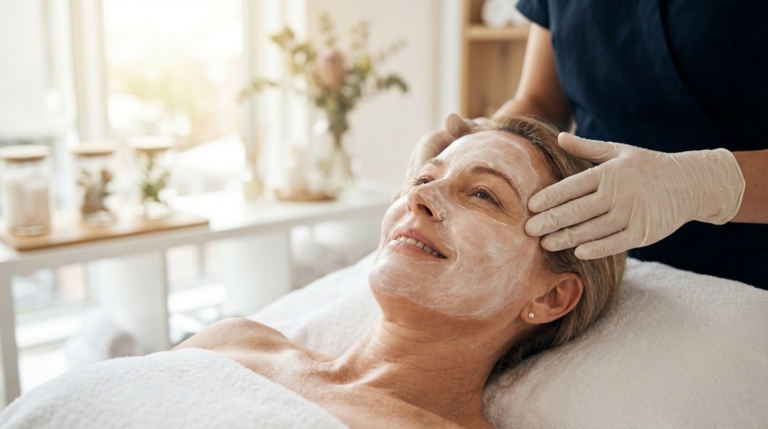
People usually ask how often you should get a facial because they are trying to avoid two extremes. They do not want to do too little and see no progress, but they also do not want to overdo it and damage their skin. Frequency is where much of the confusion begins.
A lot of advice online defaults to “once a month for everyone.” It sounds clean and easy, but it rarely reflects how skin actually behaves. Skin type, barrier health, lifestyle, stress, and environment all influence how often professional care is useful.
This guide breaks down how facial frequency actually works, how often to get a facial based on skin type, and how to recognize when your skin is asking for support.
How Often Should You Get a Facial?
There is no single schedule that fits everyone, but there is a range that aligns with how skin renews.
For many adults, professional facials every 4–6 weeks can be a useful starting point. The ideal frequency depends on skin type, treatment intensity, and how well the skin recovers between sessions.
Facial frequency works best when it supports both renewal and recovery, not when it interrupts either process.
Why Facial Frequency Matters for Skin Health

Skin is constantly adapting. It responds to stress, hormones, climate, and routine changes.
When facials are done too frequently, the barrier may not fully recover. This can increase transepidermal water loss (TEWL), leading to dehydration and sensitivity. When treatments are spaced too far apart, buildup, congestion, and uneven texture can accumulate.
The goal is not frequency for the sake of it. It is timing intervention so the skin benefits without being pushed past its limits. This is why flexible, skin-aware scheduling tends to outperform rigid routines.
Facial Frequency by Skin Type
Skin type is one of the clearest starting points when deciding how often to get a facial. While individual variation exists, there are general patterns that can help guide treatment frequency.
| Skin Type | Recommended Frequency | What to Focus On |
| Normal or balanced | Every 4–6 weeks | Maintenance, hydration, light exfoliation |
| Dry or dehydrated | Every 4–6 weeks | Barrier repair, hydration support |
| Oily or acne-prone | Every 3–4 weeks when appropriate, based on professional assessment | Congestion control, inflammation management |
| Sensitive or reactive | Every 4–6 weeks | Calming treatments, minimal stimulation |
| Aging or maturing | Every 4–6 weeks | Hydration, gradual texture support |
These timelines are general starting points and may vary depending on skin sensitivity, treatment type, and individual needs.
Balanced skin tends to recover well, which makes a steady maintenance schedule effective. Dry or sensitive skin benefits from spacing that allows the barrier to rebuild. Acne-prone skin may need more frequent guidance during flare-ups, but still requires controlled treatment rather than aggressive repetition.
Across all types, the pattern is consistent. Skin responds better to steady, moderate care than extremes.
How Lifestyle and Environment Affect Facial Frequency
Skin type is only part of the picture. Daily life plays a larger role than most people expect.
Stress, sleep quality, climate, and even travel can shift how the skin behaves. Chronic stress, for example, has been linked to slower barrier recovery and increased inflammation. Seasonal changes can also alter oil production and hydration levels.
Because of this, a schedule that works in one season may not feel right in another. It is normal for facial frequency to shift slightly during periods of stress, travel, or weather changes. Adjusting when needed tends to be more effective than sticking to a fixed timeline year-round.
Signs You May Need a Facial Sooner Than Planned
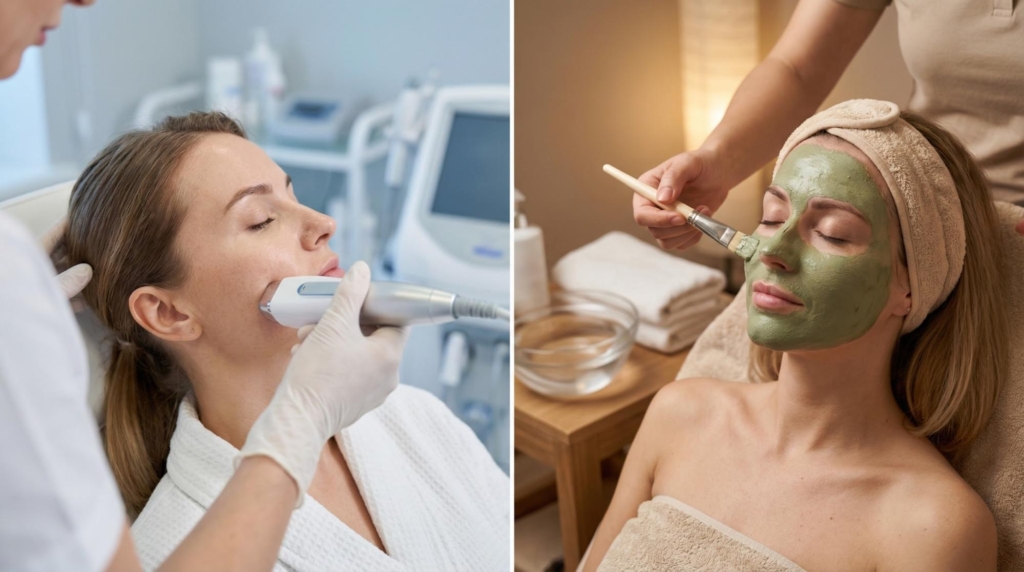
Skin usually gives subtle signals before problems become obvious. Common signs include:
- Skin feels rough or congested even with consistent cleansing
- Skincare products seem less effective than before
- Breakouts appear more frequently or take longer to heal
- Skin feels tight, reactive, or inflamed without a clear reason
- Makeup no longer sits smoothly on the surface
These changes do not necessarily mean your routine is failing. They may indicate dehydration, irritation, or other concerns that require a closer look.
Can You Get Facials Too Often?
Yes, especially when treatments are too frequent or aggressive for the skin. This can disrupt the skin barrier and increase irritation or sensitivity. Instead of accelerating results, this often slows progress.
The American Academy of Dermatology also recommends adjusting exfoliation frequency based on skin type and treatment intensity.
Skin improves when it has time to recover between treatments. Pushing it too often tends to create cycles of irritation rather than stability. Professional guidance helps balance progress with recovery, which is where long-term results come from.
How Facial Frequency Shapes Long-Term Results
From a skin health perspective, consistency matters more than intensity.
Well-spaced facials can support gradual improvement. Texture may become more even. Hydration may improve. Skin may respond better to daily products. These changes can build over time rather than appearing all at once.
From a client perspective, understanding why a schedule exists makes it easier to stay consistent. It turns facials from occasional treatments into part of a long-term plan.
How This Guidance Connects to Facial Services in Franklin, TN
Most people begin by trying to understand frequency before choosing a provider.
Once that piece is clear, the next question becomes how treatments are actually delivered. The difference often comes down to whether services are adjusted based on how the skin responds or applied as a fixed routine. That distinction tends to show up during consultation.
At A Moment’s Peace Salon & Day Spa in Franklin, facial treatments are structured around this kind of individualized approach, where frequency and technique are adjusted based on the skin. Explore our facial services to find treatments suited to your skin’s needs.
Conclusion: Facial Frequency Works Best When It’s Flexible and Consistent
How often you should get a facial depends on your skin type, barrier condition, and lifestyle.
While every 4–6 weeks works well for many people, the most effective approach is one that adapts over time. Skin is not static, and treatment schedules should reflect that.
Facials are most beneficial when they support both renewal and recovery. When frequency is aligned with how skin actually behaves, professional care becomes part of a long-term strategy rather than a trial-and-error process.
If you’re unsure how often to schedule a facial, contact A Moment’s Peace Salon & Day Spa for guidance on your skincare needs.
Frequently Asked Questions
How often should you get a facial?
For many adults, every 4–6 weeks can be a useful starting point, with adjustments based on skin type, treatment intensity, and recovery needs.
Is it okay to get a facial every month?
Yes. Monthly facials are appropriate for many people when treatments match skin tolerance and recovery needs.
How often should acne-prone skin get facials?
For acne-prone skin, every 3–4 weeks may be appropriate depending on the skin’s condition and professional assessment.
Can getting facials too often damage your skin?
Yes. Overly frequent treatments can weaken the barrier and increase sensitivity.
How do you know when you need a facial?
Common signs include dullness, congestion, breakouts, and changes in skin texture. Persistent sensitivity may require professional evaluation.