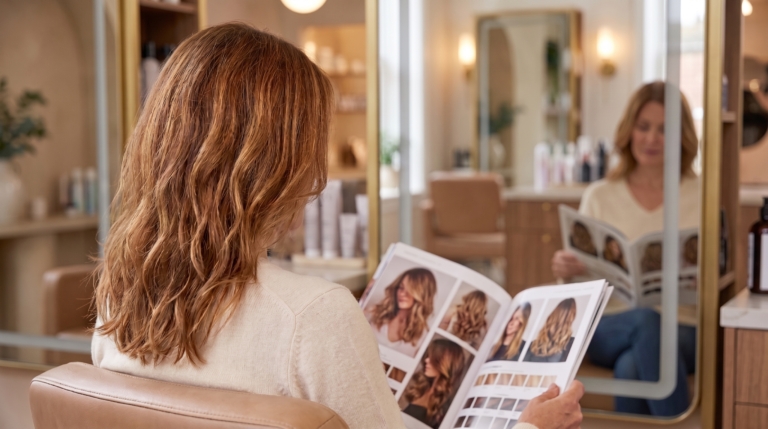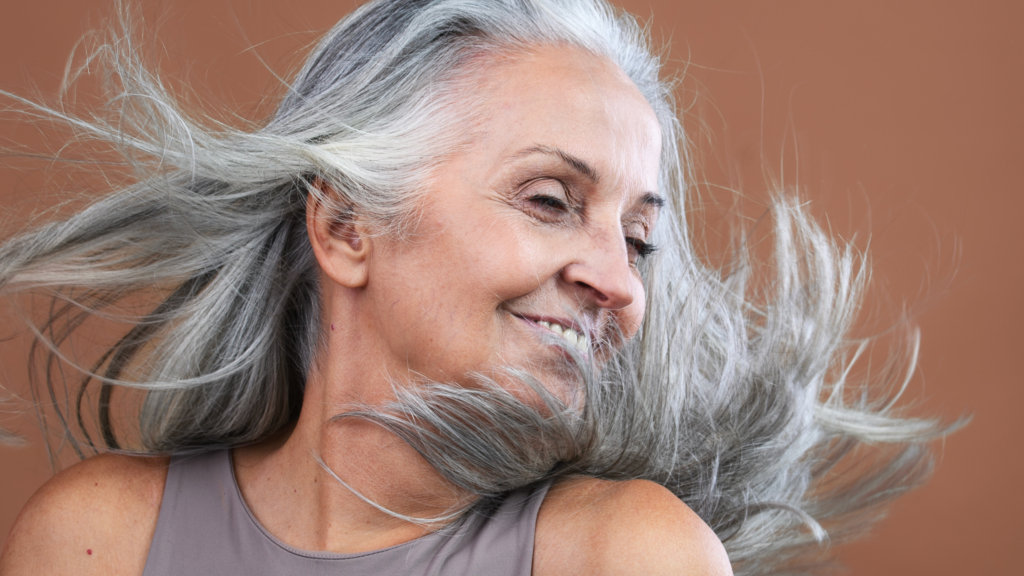
Gray hair has been treated as something to manage, delay, or cover for most of modern beauty culture. That has shifted. More women across a wider age range are choosing to work with their natural gray rather than against it, and the most compelling results come from understanding what gray hair actually is and how to treat it accordingly.
The stylists at A Moment’s Peace work with gray transitions regularly. Here is what the process actually involves, and how to make it look like a decision rather than a default.
Why Gray Hair Is Different: The Science
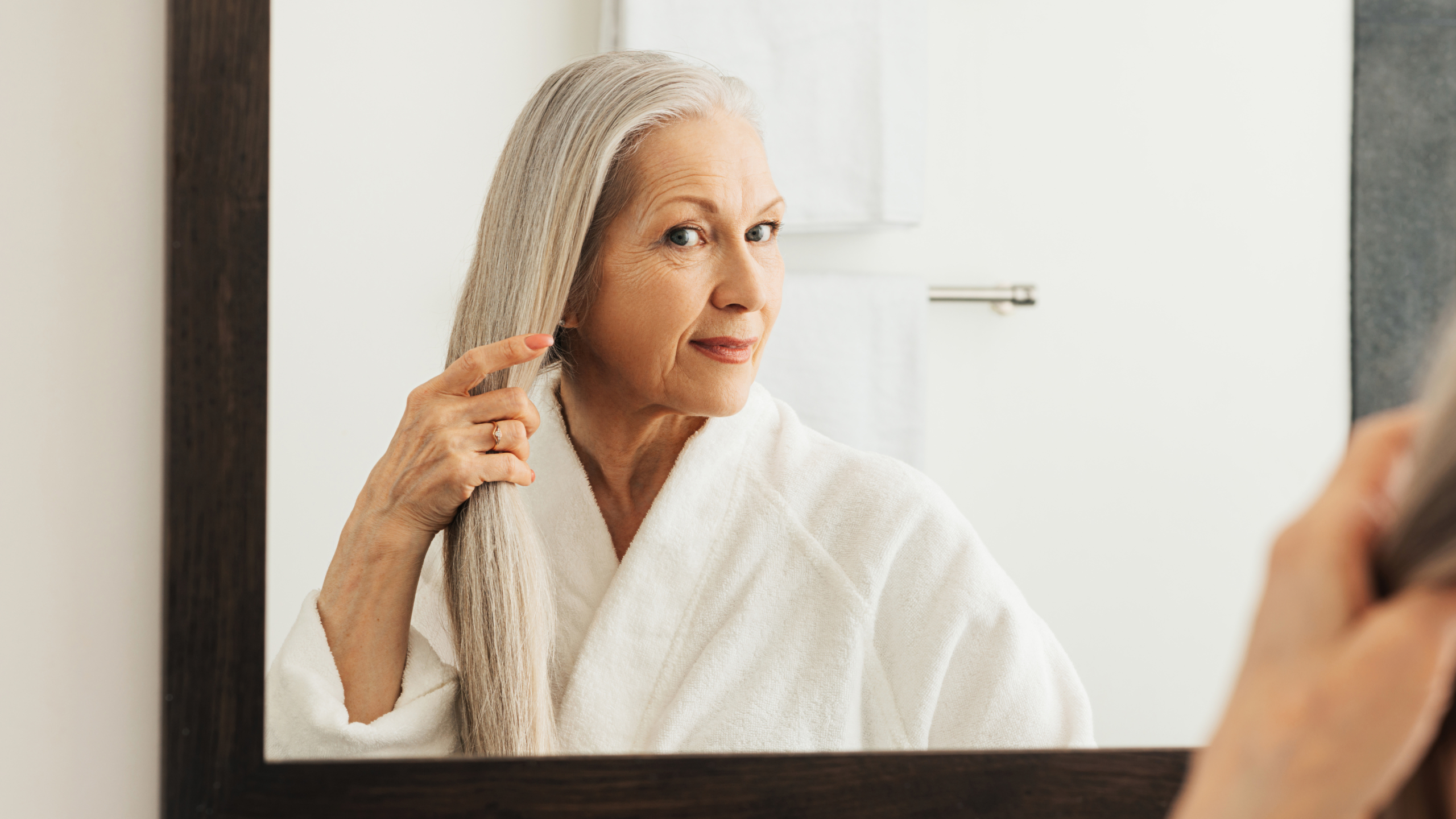
Gray hair is not simply hair that has lost color. The pigment-producing melanocytes in the hair follicle have reduced or stopped production of melanin, the protein that gives hair its color. Without melanin, the hair shaft is structurally different as well as visually different.
Gray hair tends to be coarser, more wiry, and more porous than pigmented hair. Higher porosity means it absorbs moisture quickly but loses it just as fast, which is why gray hair is often described as dry or frizzy. The coarser texture means it reflects light differently, and without the depth of pigmented color, it can easily look flat or dull without the right care.
Understanding this is the starting point for caring for gray well. You are not maintaining the same hair with a different color. You are maintaining hair with genuinely different physical properties.
The Three Ways to Transition to Gray
The Cold-Turkey Grow-Out
The most straightforward approach: stop coloring and let the natural gray grow in. The appeal is simplicity and a definitive end to the maintenance cycle. The challenge is the transition line between your current dye and the natural growth, which becomes increasingly visible as weeks turn into months.
This works best when the natural gray is relatively even in distribution, when the existing color is not dramatically different from the incoming gray, and when you have the patience for a transition that realistically takes 12 to 18 months for most lengths.
Gray Blending with Balayage
The most popular stylist-recommended approach for clients who want a graceful transition rather than a hard line. Your colorist uses balayage to paint lighter, silver-toned or platinum highlights through your existing color, gradually blending the incoming gray into the overall look.
As the natural gray grows in, it blends with the lightened sections rather than creating a visible root line. This extends the transition timeline to a more comfortable pace and produces a result that looks intentional throughout the process.
Gray Enhancement Gloss or Toner
For clients who are substantially gray already, a silver or platinum toning gloss can dramatically improve the quality and vibrancy of the gray. Instead of appearing dull or yellow, the toned gray becomes a vivid, lustrous silver or white. This is a low-commitment, reversible option that requires a professional application every six to eight weeks.
How to Care for Gray Hair
Switch to Sulfate-Free Shampoo
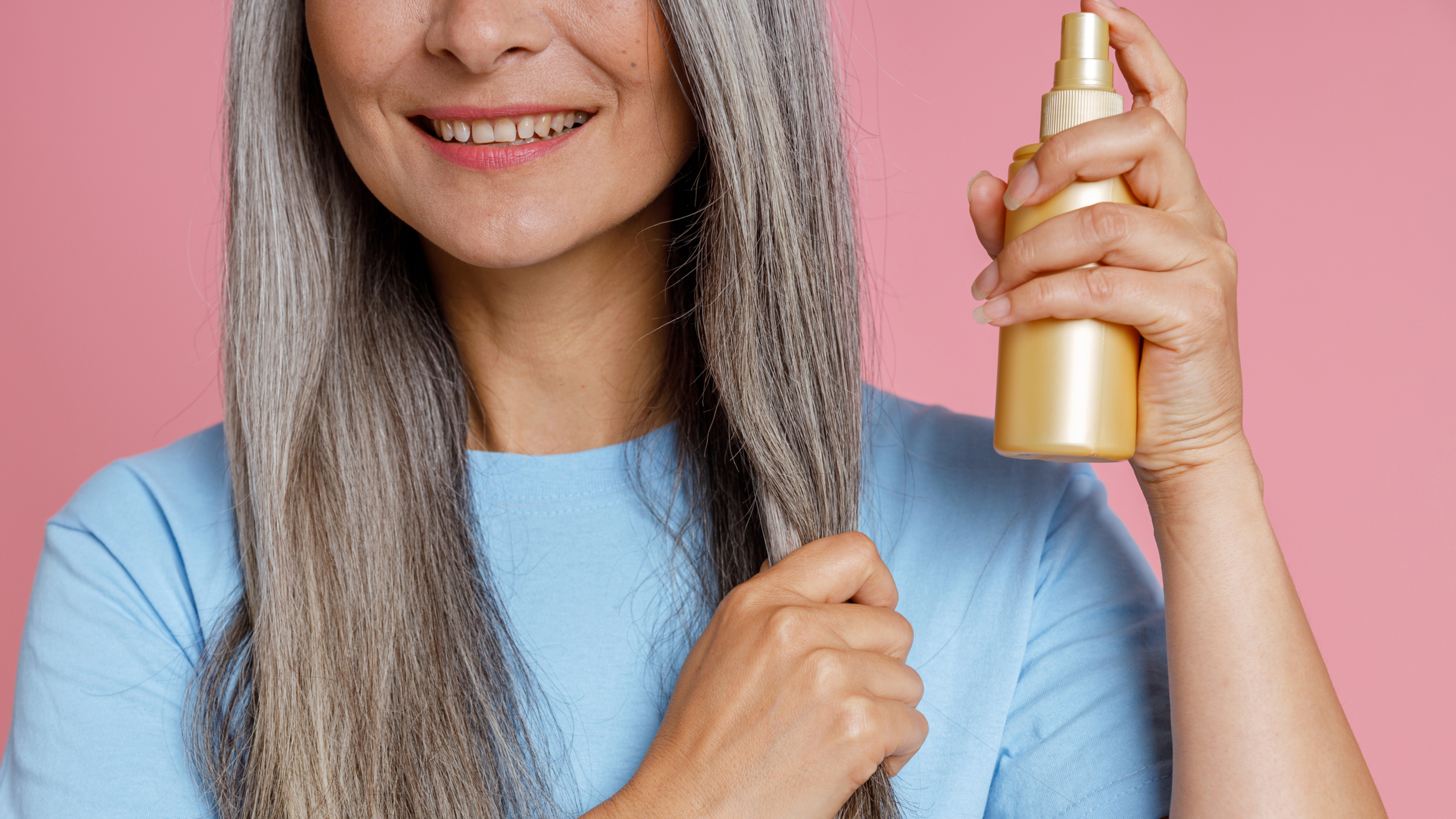
Gray hair’s higher porosity means it is more susceptible to the stripping effect of sulfate-based shampoos. Sulfates remove the natural oils that gray hair needs to maintain softness and manageability. A sulfate-free formula cleans the hair without accelerating the dryness that is already inherent to gray hair’s structure.
Deep Condition Weekly
Gray hair benefits significantly from weekly deep conditioning. Look for masks with keratin, argan oil, or ceramides to temporarily fill the hair shaft’s porosity gaps and restore smoothness. Applied for 10 to 20 minutes before rinsing, a weekly mask is the single most effective at-home intervention for improving the feel and behavior of gray hair.
Use a Purple or Blue Toning Shampoo
Over time, gray and white hair develops a yellowish or brassy cast from environmental exposure including UV light, pollution, and minerals in tap water. A purple or blue-tinted shampoo used once or twice a week deposits a small amount of violet pigment that neutralizes the warm tones and keeps the gray looking cool and bright. Do not use it every wash, as over-toning can leave a blue or purple cast.
Protect from UV and Heat
The same UV exposure that causes hyperpigmentation in the skin causes yellowing and dryness in gray hair. A UV-protective hair mist used before outdoor time and a heat protectant before styling tools are both worth the habit for anyone maintaining gray color quality.
Styling Gray Hair: What Actually Flatters
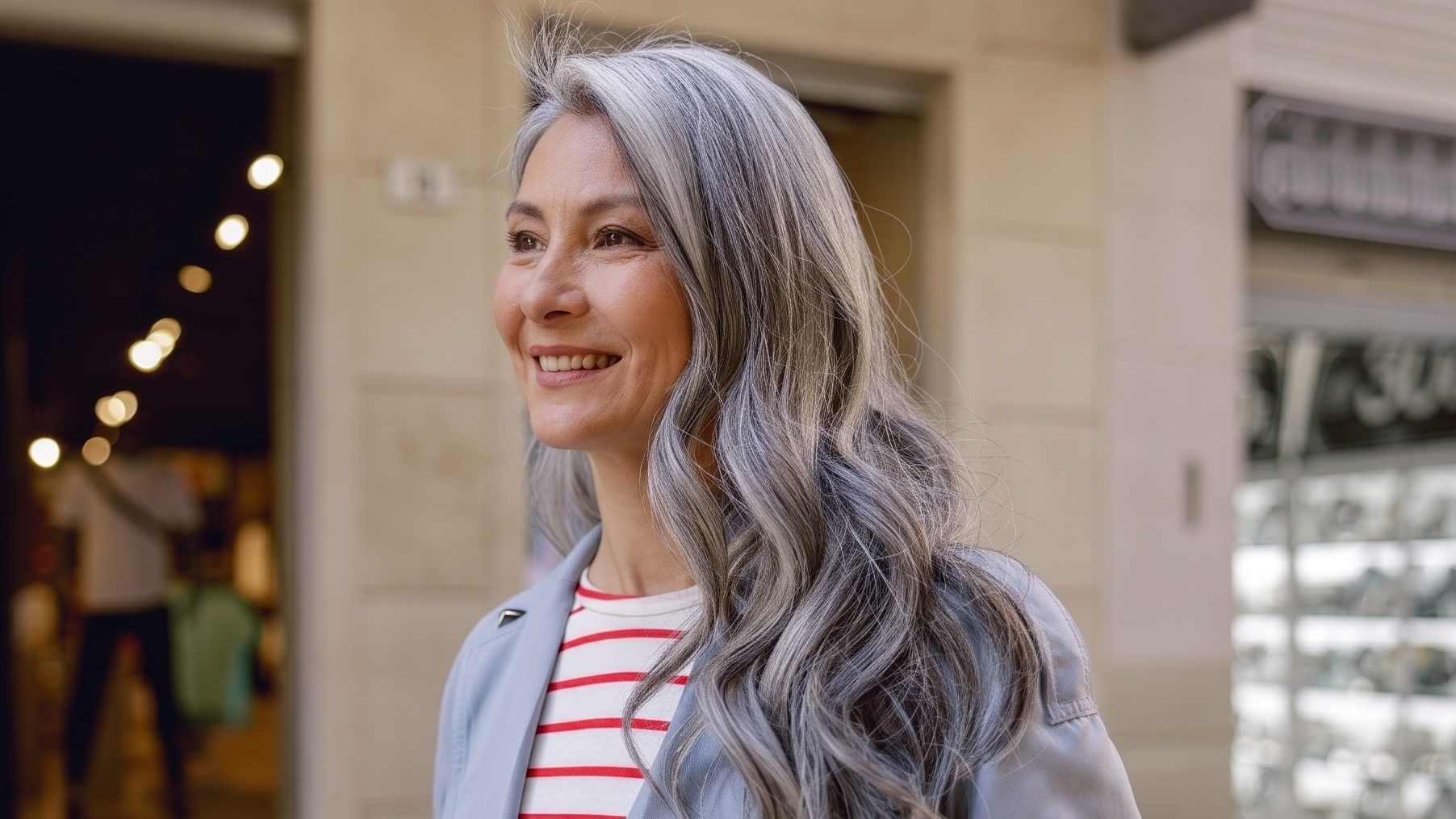
Prioritize Cut Over Color
With gray hair, the cut carries more of the visual weight than it does with pigmented hair because there is no color variation to create dimension. A deliberately shaped cut, with angles, layers, and face-framing elements, provides the structure that color would otherwise supply. This is why a great haircut matters even more when going gray.
Face-Framing Layers
Soft layers around the face brighten the complexion in a way that flat or blunt cuts do not. For gray hair particularly, face-framing pieces add movement and prevent the color from overwhelming the face, which can happen when a single-tone gray covers the entire head without any variation.
Consider Updating Your Makeup
Gray hair changes the overall contrast of your face. Brows and lashes that blended naturally with darker hair can appear lighter or less defined against gray. Many clients who go gray find that filling in brows slightly more than before, and using a mascara that adds definition, makes the transition feel more polished.
Book a Gray Hair Consultation in Franklin, TN
Our colorists at A Moment’s Peace have experience with every stage of the gray transition: cold-turkey grow-outs, balayage blending, toning glosses, and full gray enhancement. A consultation before committing to a direction gives you a clear plan and realistic expectations for how the transition will look on your specific hair and face.
We are at 9050 Carothers Pkwy, Suite 108, Franklin, TN 37067. Book online at amomentspeace.com or call 615-224-0770.
Frequently Asked Questions
How long does it take to go fully gray?
The timeline depends on your current hair length, how fast your hair grows, and how you choose to transition. A cold-turkey grow-out on medium-length hair typically takes 12 to 18 months to reach a fully natural look. Balayage blending can significantly reduce the visibility of the transition line and compress the awkward phase.
Does gray hair need different products than colored hair?
Yes. Gray hair has higher porosity and a coarser texture that benefits from sulfate-free shampoo, regular deep conditioning, and periodic toning with purple or blue shampoo. Products marketed specifically for gray or silver hair are formulated for these needs and are worth using over standard formulas.
Can I color my hair again if I decide gray isn’t for me?
Yes. Gray hair is highly porous and accepts color readily. The main consideration is that very white or light gray hair has no underlying pigment to work with, which means some color families, particularly warm reds and rich brunettes, may need more frequent application to maintain depth. Your colorist can advise on the best approach for re-coloring from gray.