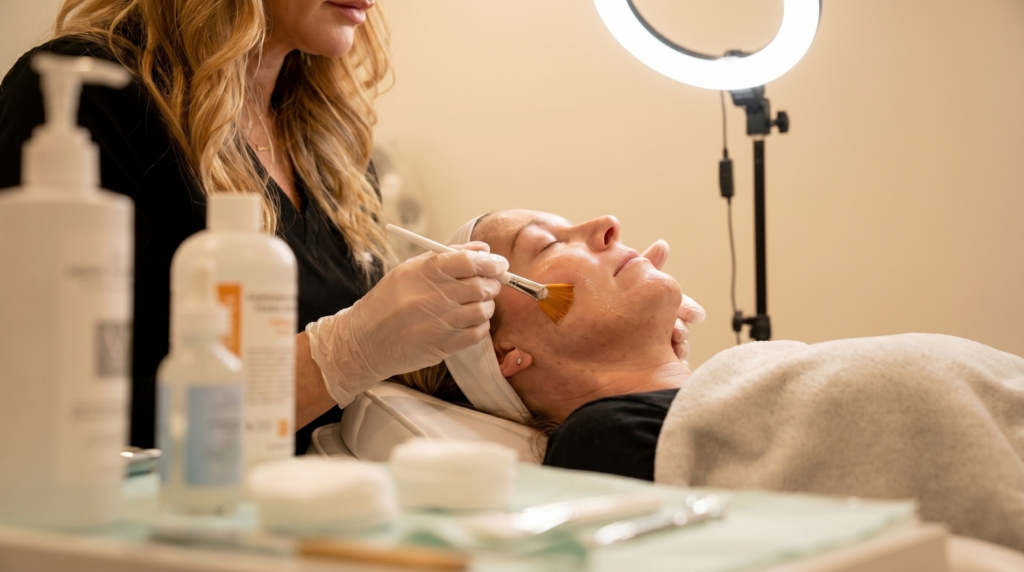
A chemical peel is one of the most time-tested treatments in professional skincare, with a documented history in clinical dermatology dating back decades. When performed by a licensed esthetician or medical professional at the right depth for the right skin type, it produces results that topical products cannot replicate: genuine exfoliation at the cellular level, stimulation of new skin growth, and measurable improvement in tone, texture, and pigmentation.
A Moment’s Peace in Franklin, TN offers chemical peels across a range of depths and formulations, performed under the supervision of our medical director, Dr. Sujay Kumar. Here is everything you need to know before booking.
How a Chemical Peel Works
A chemical peel applies an acid solution to the skin’s surface. The acid dissolves the bonds between dead and damaged skin cells in the outermost layers, allowing them to shed more rapidly than they would through natural cell turnover alone. Depending on the strength of the solution, the peel also penetrates into the upper dermis, triggering a mild wound-healing response that stimulates collagen production and accelerates the generation of fresh, undamaged skin cells.
The depth of penetration is controlled by the acid type, its concentration, and the time it is left on the skin before neutralization. This is precisely why professional peels produce different results from at-home peel pads: the variables that determine safety and efficacy require trained judgment to manage correctly.
Types of Chemical Peels
| Peel Type | Acids Used | Depth | Best For | Downtime |
| Superficial | Glycolic, lactic, mandelic, low-% salicylic | Epidermis only | Dullness, mild pigmentation, congestion, surface texture | None to minimal flaking, 1–2 days |
| Medium | TCA (10–35%), Jessner’s solution | Epidermis into upper dermis | Moderate hyperpigmentation, fine lines, acne scarring, sun damage | 5–7 days visible peeling |
| Deep | High-% TCA, phenol | Mid-dermis | Significant wrinkles, severe scarring (physician-supervised only) | 7–14+ days |
Superficial Peels: The Maintenance Peel
Superficial peels use alpha hydroxy acids (glycolic, lactic) or low-concentration beta hydroxy acids (salicylic) to exfoliate the skin’s outermost layer without penetrating into the dermis. They produce a brightening and smoothing effect with minimal to no downtime and can be performed monthly as a maintenance treatment.
Glycolic acid peels work by breaking down the intercellular bonds holding dead skin cells together, accelerating turnover and improving surface texture, tone, and early hyperpigmentation. Lactic acid peels are gentler and more hydrating, suited for clients with dry or sensitive skin. Salicylic acid peels are oil-soluble and penetrate into pore channels, making them the preferred choice for acne-prone or congested skin.
Medium-Depth Peels: The Resurfacing Peel
Medium-depth peels use trichloroacetic acid (TCA) or Jessner’s solution to penetrate through the epidermis and into the upper dermis. They produce significant exfoliation with five to seven days of visible peeling and are the appropriate choice for moderate hyperpigmentation, acne scarring, fine lines, and sun damage that superficial peels cannot adequately address.
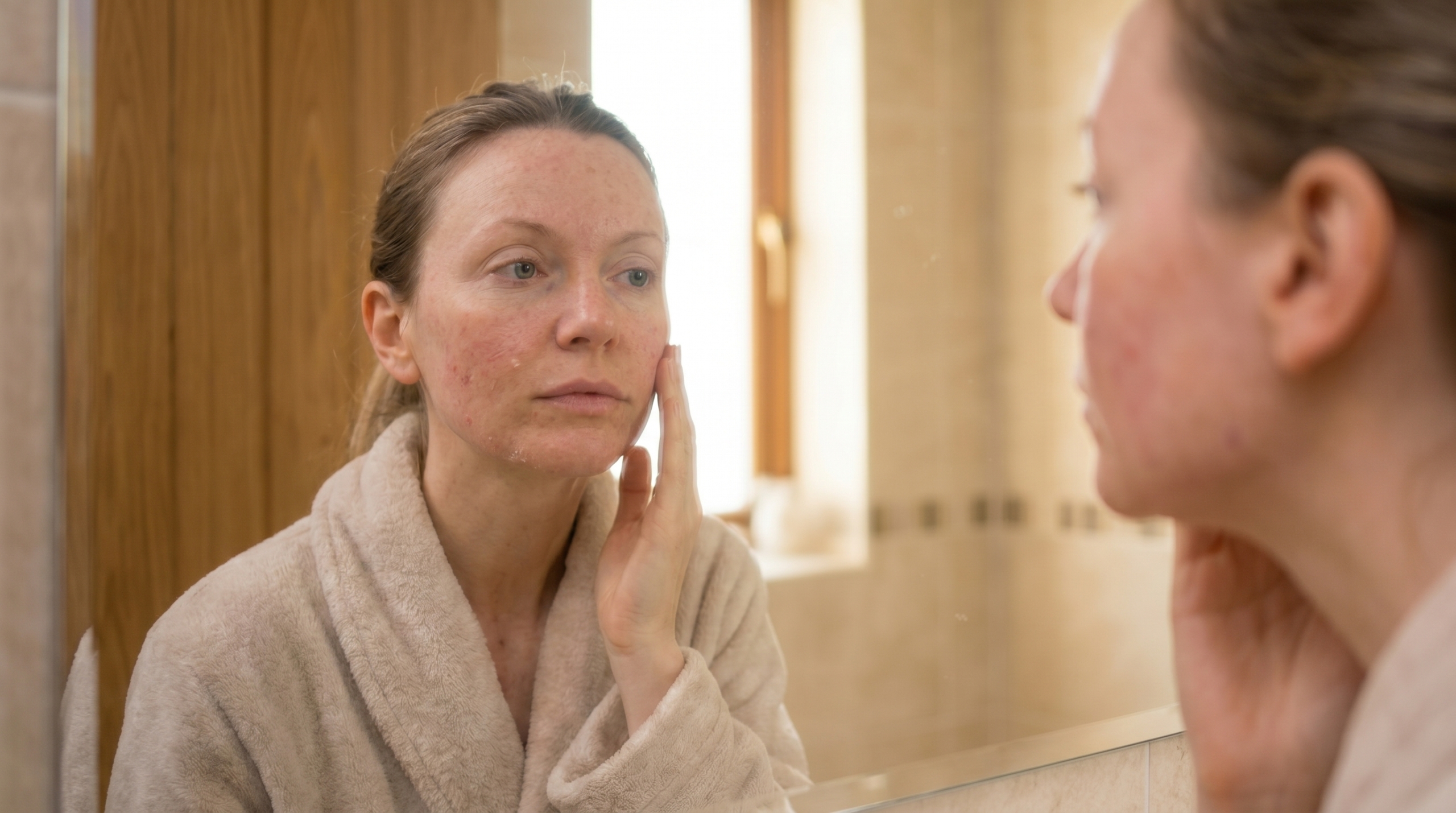
The wound-healing response from a medium peel stimulates meaningful collagen production and cell renewal. The skin that emerges after the peeling phase is noticeably smoother, more evenly toned, and structurally improved compared to pre-treatment.
What Chemical Peels Treat

Hyperpigmentation and melasma respond well to peels containing kojic acid, mandelic acid, or TCA that directly target melanin-producing cells in the epidermis. Sun damage, including age spots and uneven tone from cumulative UV exposure, improves with regular superficial to medium peel treatments as the damaged surface cells are removed and replaced.
Acne-prone skin benefits from salicylic acid and mandelic acid peels that reduce active breakouts, clear congestion, and over a series of treatments reduce the post-inflammatory marks that breakouts leave behind. Fine lines and early wrinkles respond to medium-depth peels that stimulate collagen in the upper dermis. Rough texture and uneven surface quality improve with regular superficial peels.
Chemical Peels and Skin Tone
The safety of a chemical peel depends significantly on the client’s Fitzpatrick skin type, a standardized classification from I (very fair) to VI (very dark). Deeper peels carry a higher risk of post-inflammatory hyperpigmentation on darker skin tones because the aggressive exfoliation can trigger a melanin response during healing.
At A Moment’s Peace, your esthetician will assess your Fitzpatrick type and skin history before recommending a peel depth. Superficial peels with mandelic or lactic acid are generally safe across all skin tones. Medium and deep peels require more careful selection based on your individual pigmentation response history.
Preparing for a Chemical Peel
Stop retinol, AHAs, BHAs, and physical exfoliants five to seven days before your peel. Avoid significant sun exposure for two weeks before. Stay well-hydrated in the days leading up to your appointment, and do not apply any products on the day of treatment. For the full preparation protocol, see our guide on how to prepare your skin for a professional facial or chemical peel.
Post-Peel Aftercare
After a superficial peel: keep the skin clean and moisturized, avoid actives for 48 hours, and apply SPF 30 or higher every morning. After a medium peel: do not pick or pull the peeling skin, keep it moisturized continuously, avoid direct sun entirely for the duration of the peeling phase, and apply SPF religiously. Your esthetician will provide specific aftercare instructions at your appointment.
Book a Chemical Peel in Franklin, TN
A Moment’s Peace is at 9050 Carothers Pkwy, Suite 108, Franklin, TN 37067. Chemical peels are available as standalone services or as part of a broader facial treatment plan. All treatments are supervised by our medical director, Dr. Sujay Kumar. Book online at amomentspeace.com or call 615-224-0770.
Frequently Asked Questions
How often can I get a chemical peel?
Superficial peels can be performed monthly. Medium-depth peels typically require two to four months between treatments to allow full healing and collagen remodeling. Your esthetician will recommend the right interval based on your skin’s response to each treatment.
Does a chemical peel hurt?
Most clients experience a tingling or warm sensation during a superficial peel that resolves within minutes. Medium-depth peels produce more sensation during application and may require a short neutralization step. Your esthetician will monitor your response throughout and can adjust timing accordingly.
Can I get a chemical peel if I have dark skin?
Yes, with the right peel selection. Mandelic acid peels, low-concentration lactic acid peels, and specifically formulated combination peels are safe and effective across darker skin tones. Medium and deep peels require more careful assessment. Your esthetician will assess your Fitzpatrick type and recommend the safest and most effective option for your skin.