Balayage gives you a sun-kissed gradient. Traditional highlights give you brightness and contrast. A color melt does something different: it takes two or more shades and blends them into each other so completely that the transition is invisible. No line. No harsh root. No obvious boundary between one color and the next.
The result is dimensional hair that reads as entirely natural, even when the shades involved are anything but.
What Is a Color Melt?
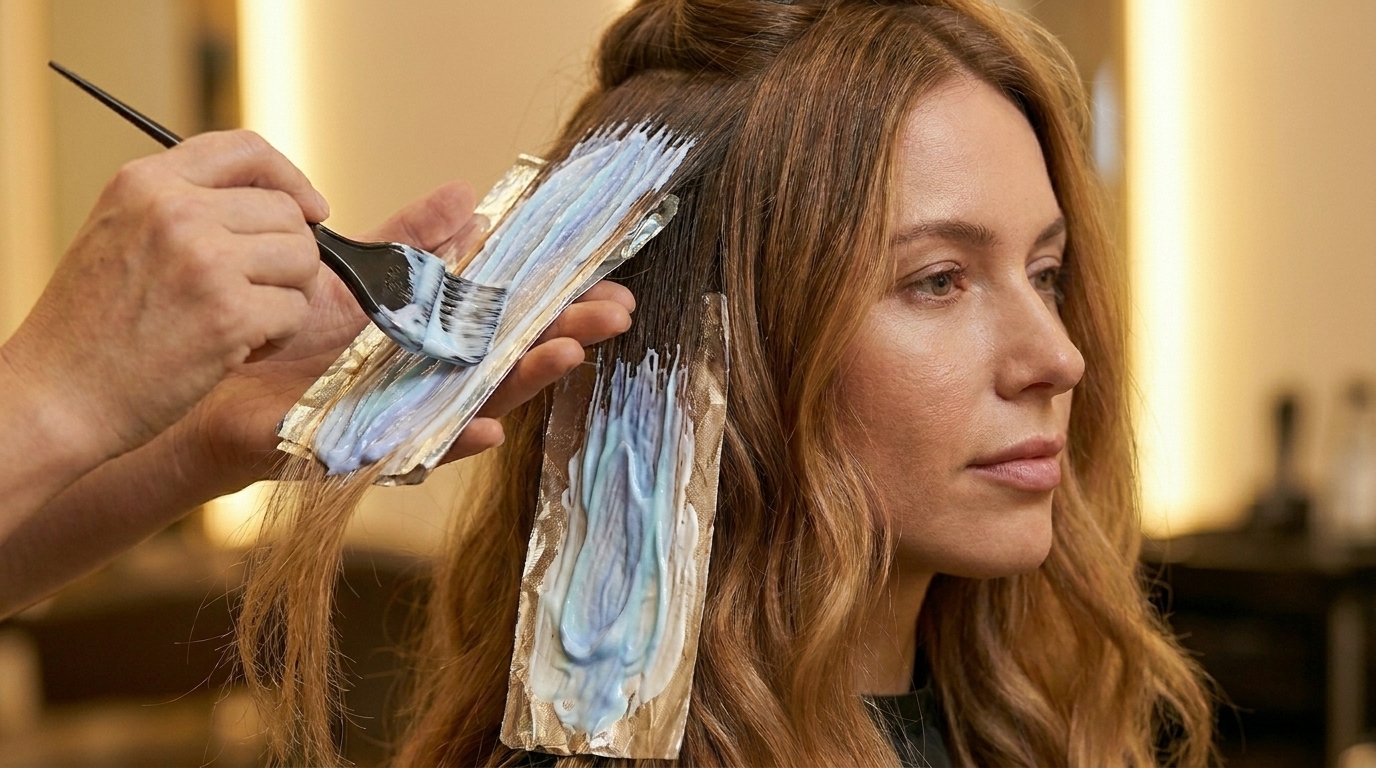
A color melt is a technique in which a colorist applies two or more shades from root to end, blending the boundary between each shade through a gradient application so that they merge seamlessly rather than meeting at a visible edge. The technique is applied with a brush, worked in at the transition zone between shades, and blended until no line is detectable.
The most common version uses a deeper shade at the root and a lighter shade through the mid-lengths and ends, creating a seamless dark-to-light gradient. But color melts can also be used to blend unusual color combinations, to refresh faded balayage, or to create a specific tonal story where the root and end colors are chosen for contrast but the blend makes them cohere.
Color Melt vs Balayage vs Ombre: What’s the Difference?
| Color Melt | Balayage | Ombre | |
| Technique | Gradient blend of 2+ shades | Freehand painted lightener | Two-tone with visible transition |
| Line of demarcation | None — fully seamless | Soft, natural | Visible but intentional |
| Root treatment | Colour is applied from root | Root left natural | Dark root intentional |
| Tones used | Complementary or contrasting | Natural sun-kissed | High contrast |
| Grow-out | Very gradual, seamless | Natural, low maintenance | Defined, noticeable |
| Best for | Dimensional depth, seamless blend | Natural brightness, low maintenance | Bold two-tone result |
Who a Color Melt Is Best Suited For
Color melts work particularly well for clients who want visible color depth and dimension without a harsh line at the root, who are transitioning from a previous color service and need the new growth blended into the existing color, who want to refresh or revive a balayage that has grown out or faded unevenly, and who want a more polished, intentional version of the lived-in color trend.
They are especially effective on medium to long hair where the gradient has room to develop across the length. On very short hair, the transition zone is compressed and the effect is more subtle.
What Shades Work Best for a Color Melt?
The classic color melt uses shades within the same tone family, for example a rich chocolate brown at the root melting into a caramel and then a warm honey at the ends. Staying within a tone family creates the most seamless blend and the most natural result.
More adventurous color melts can work across tone families, for example a deep cool brunette melting into a warm copper at the ends. These require more precise blending at the transition zone to prevent a muddy or green intermediate shade, and are best executed by colorists experienced with color theory.
Your colorist will consider your natural base, your skin tone, and your maintenance preference when recommending a shade combination.
How to Maintain a Color Melt at Home

Switch to Sulfate-Free Shampoo
Sulfates are the detergent agents in standard shampoos. They clean effectively but strip color at the same time. Switching to a sulfate-free formula significantly extends the life of a color melt, particularly the lighter sections near the ends that are more prone to fading.
Use a Color-Depositing Conditioner or Gloss
For brunette color melts, a color-depositing conditioner in a warm brown or neutral tone can top up the color between appointments and keep it looking rich. For blonde or highlighted melts, a purple-toned conditioner neutralizes brassiness in the lighter sections.
Protect from Heat and Sun
UV exposure and heat styling both accelerate color fading. Apply a UV-protective hair mist before spending time outdoors. Use a heat protectant spray before blow-drying or using hot tools. These are small habits with a noticeable impact on how long the color stays fresh between appointments.
Time Your Touch-Ups
Because a color melt covers the root zone, it requires more frequent touch-ups than balayage to maintain its seamless quality. Expect to return every eight to twelve weeks for a root refresh and blend. Your colorist will assess whether a full refresh or just a root application is needed at each visit.
Book a Color Melt Appointment in Franklin, TN
Our colorists at A Moment’s Peace have experience with the full range of color techniques including color melts, balayage, foil highlights, and glossing. We offer color consultations before new color services so you and your colorist can agree on the goal, the shade selection, and the maintenance schedule before the appointment begins.
We are at 9050 Carothers Pkwy, Suite 108, Franklin, TN 37067. Book online at amomentspeace.com or call 615-224-0770.
Frequently Asked Questions
How long does a color melt last?
A color melt typically looks its best for eight to twelve weeks before a root refresh is needed. The ends and mid-lengths maintain the color longer, but the root application covers natural re-growth that becomes visible as the hair grows out. With sulfate-free shampoo and heat protection, the color in the lengths can hold well for three to four months.
Is a color melt damaging to hair?
A color melt that involves lightening carries the same potential for damage as any lightening service. The degree depends on how many levels of lift are required and the current condition of the hair. A color melt that uses deposit-only color (darkening or maintaining the natural level) is essentially non-damaging. Your colorist will assess the health of your hair before recommending a technique and approach that minimizes damage.
Can I get a color melt on dark hair?
Yes. A color melt on dark hair typically uses shades close to the natural base but adds dimension and warmth through complementary tones. For a more dramatic shift from dark to light, the service may need to be done in stages across multiple appointments to keep the hair in good condition.