

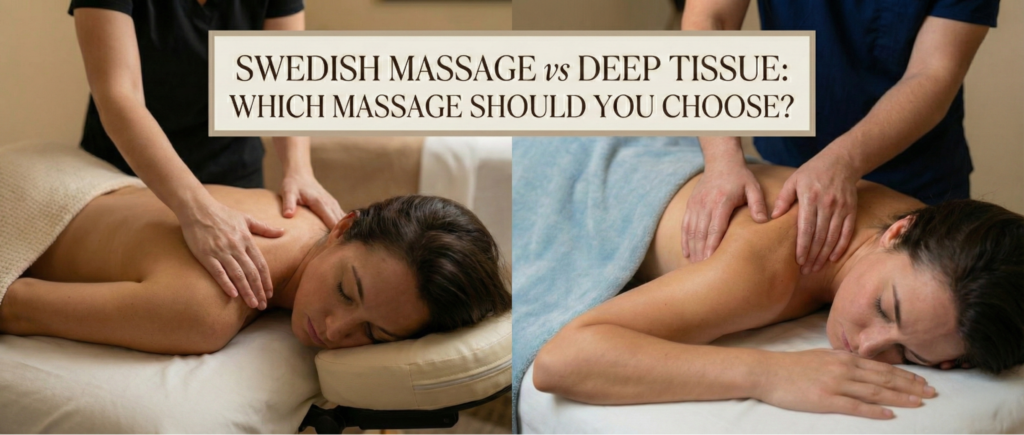
When booking a massage, many people face the same question: Swedish or deep tissue? The choice is often framed as a preference or a tolerance test. One is gentle, the other is intense. That framing misses what actually matters.
Swedish massage and deep tissue massage are designed for different situations. They influence the body differently, and the results tend to show up in different ways over time.
Once you understand that, the decision becomes less about guessing and more about recognizing what your body is dealing with right now.
What Is Swedish Massage Designed to Do?
Swedish massage is often associated with relaxation, but its benefits go beyond simply unwinding. It helps ease everyday muscle tension while encouraging a calmer, more relaxed state.
How Swedish Massage Affects the Body and Nervous System
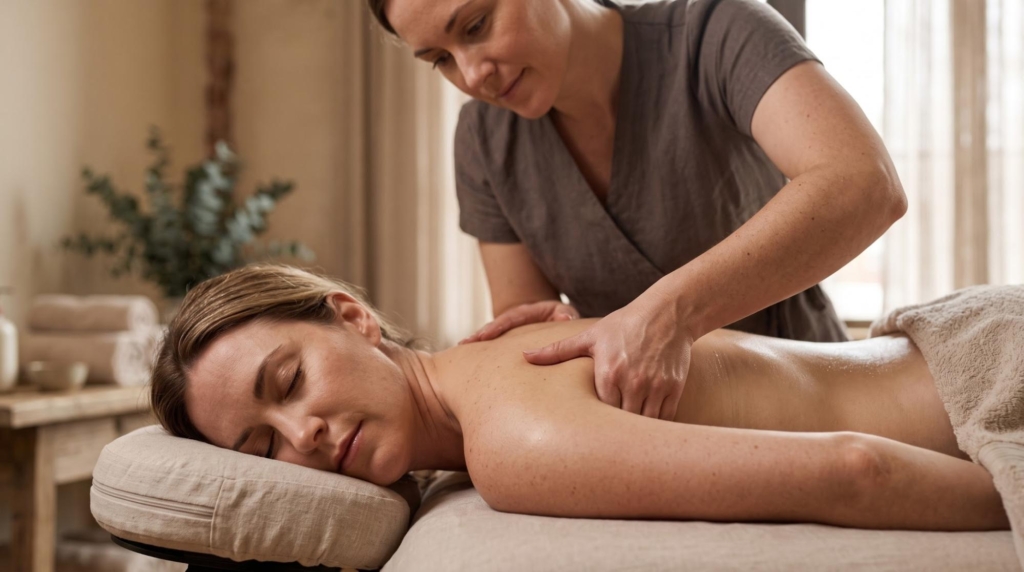
The techniques used in Swedish massage are intentionally consistent. Long, flowing strokes and gentle kneading may help ease muscle tension gradually.
Because the movement is predictable, the body is less likely to brace, which makes it easier for tension to soften over time. This consistency also affects the nervous system. As the body relaxes physically, breathing slows and the stress response begins to quiet.
Research on massage therapy suggests that it can help ease stress and encourage relaxation, supporting both physical comfort and emotional well-being. In practice, Swedish massage tends to be most helpful when:
- Tension feels spread across the body rather than isolated
- Stress shows up as restlessness, fatigue, or poor sleep
- The goal is to feel more balanced rather than to correct a specific issue
What Is Deep Tissue Massage Meant to Address?
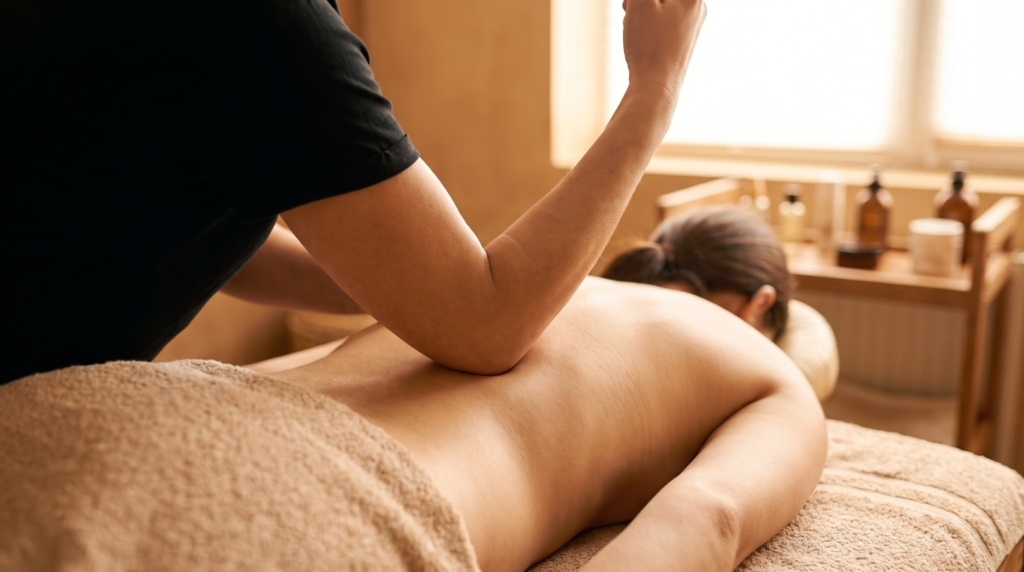
Alt text: Therapist applying elbow pressure during deep tissue massage
Deep tissue massage is often misunderstood as simply a more intense version of Swedish massage. In reality, it is designed to address something different.
How Deep Tissue Massage Works on Muscle Restriction
Deep tissue massage focuses on deeper layers of muscle and connective tissue. Instead of working across the whole body, the therapist spends more time on specific areas that feel restricted or overused.
The pace is slower, and pressure is applied more deliberately. Rather than encouraging immediate relaxation, the goal is to relieve tension in specific areas and improve comfort. This often means working on areas that have adapted to stress, posture, or repetitive movement.
According to the National Center for Complementary and Integrative Health, massage techniques like deep tissue may help reduce pain intensity and improve function in certain musculoskeletal conditions.
Deep tissue massage is typically the better fit when:
- Discomfort is localized, such as neck, shoulders, or lower back
- Tension feels stubborn and does not respond to lighter work
- Movement feels restricted or uneven
- The issue has been building over time rather than appearing suddenly
Swedish vs Deep Tissue Massage: Key Differences That Matter
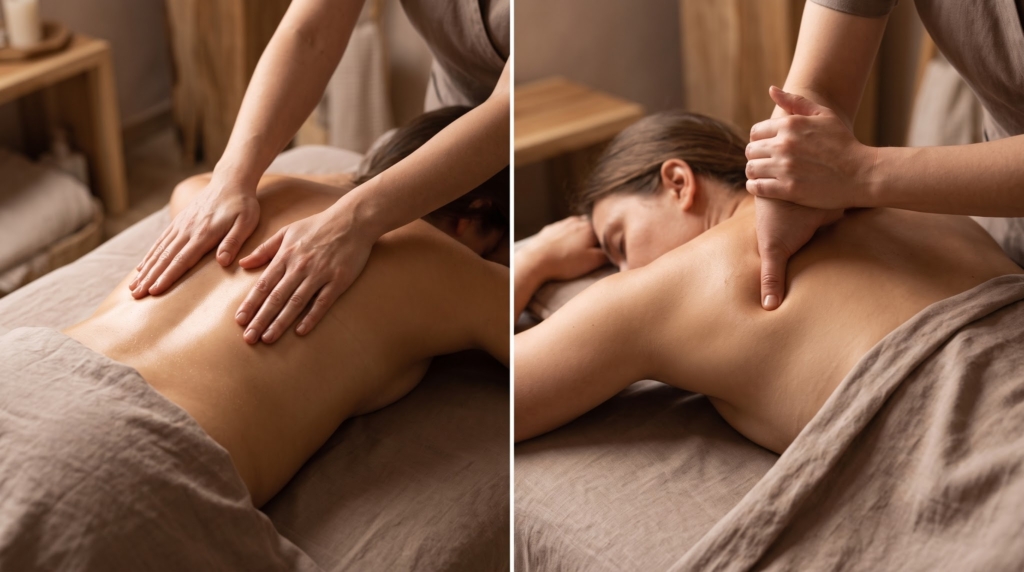
| Aspect | Swedish Massage | Deep Tissue Massage |
| Primary focus | Calming and regulating the body | Relieving persistent tension in targeted areas |
| Pressure | Light to moderate | Moderate to deep, sustained |
| Pace | Smooth and continuous | Slow and targeted |
| Scope | Whole-body tension | Localized areas |
| Nervous system response | Promotes relaxation | May feel intense before releasing |
| After-effect | Calm, steady, mentally lighter | Possible relief from stiffness, with temporary soreness |
| Best for | Stress, general tension | Persistent muscle tension and localized discomfort |
Why These Differences Affect Results
Swedish massage works by helping the body downshift. The benefits often show up as improved sleep, reduced baseline tension, and a greater sense of ease between sessions.
Deep tissue massage works more locally. Instead of affecting the whole system, it focuses on helping relieve tension and stiffness in specific areas. The results are often more physical than emotional, such as reduced stiffness or better range of motion.
Neither approach is better. They are simply designed for different outcomes.
How to Choose Between Swedish and Deep Tissue Massage
The most useful way to choose is to look at how your body has been feeling recently rather than trying to pick the “right” option from a menu.
If tension feels widespread or tied to stress, Swedish massage usually fits better because it allows the body to settle without intensity. If discomfort feels specific and persistent, deep tissue massage may be a better fit because it allows for more focused work on areas of persistent tension.
.
Many people move between both styles over time. What works best often depends on what the body is dealing with in a given moment rather than a fixed preference.
Comfort is also an important part of the experience. Whether you prefer lighter pressure or more focused work, sharing your preferences and any existing health concerns with your massage therapist helps them tailor the session to your needs.
If you’re recovering from an injury or managing a medical condition, it’s always a good idea to check with your healthcare provider beforehand. Copy
Why Massage Preferences Change Over Time
Massage needs rarely stay the same. Stress levels shift, routines change, and physical demands evolve. Building a regular self-care routine can make it easier to adjust your massage choices as your needs change.
Some people start with Swedish massage to regulate stress and understand how their body responds. Others begin with deep tissue to address pain and later shift toward Swedish massage once their body feels more stable.
In real-world practice, sessions are not always strictly one or the other. At A Moment’s Peace Salon & Spa in Franklin, therapists often adjust techniques within a session based on how the body responds. This allows the work to stay aligned with what the client actually needs rather than forcing a rigid category.
How This Fits Into Long-Term Massage Care
Swedish massage and deep tissue massage are not competing options. They are tools that serve different roles over time.
Massage becomes more useful when it reflects what the body is experiencing. Swedish massage supports regulation and recovery, while deep tissue massage provides more targeted attention to areas of persistent tension. Used together, they allow for a more flexible and realistic approach to care.
Conclusion: Choose Based on What Your Body Needs Now
The choice between Swedish massage and deep tissue massage is not about how much pressure you can handle. It is about what your body needs right now.
When stress feels dominant and tension is widespread, Swedish massage often fits better. When discomfort is specific and persistent, deep tissue massage may be a better fit for more focused relief.
The goal is not to commit to one style. It is to choose what supports you in the moment and adjust as your needs change.
Ready to find the right massage for you? Explore the massage services at A Moment’s Peace Salon & Day Spa in Franklin, TN, and choose a treatment that suits your needs and preferences.
Swedish vs Deep Tissue Massage FAQs
Is deep tissue massage better than Swedish massage?
No. They are designed for different purposes, and the right choice depends on what your body needs.
Can Swedish massage help with pain?
Yes. Swedish massage may help ease mild muscle discomfort and stress-related tension. For persistent or more localized discomfort, your massage therapist can help determine whether a more targeted approach would be appropriate.
Is soreness after deep tissue massage normal?
Yes. Temporary soreness can occur after a deep tissue massage and often resolves within a day or two.
Can one session include both techniques?
Yes. Many sessions blend approaches depending on how the body responds.
Which massage is better for stress relief?
Swedish massage is typically more effective because it focuses on calming the nervous system.